Another Republican state representative switches to Libertarian Party

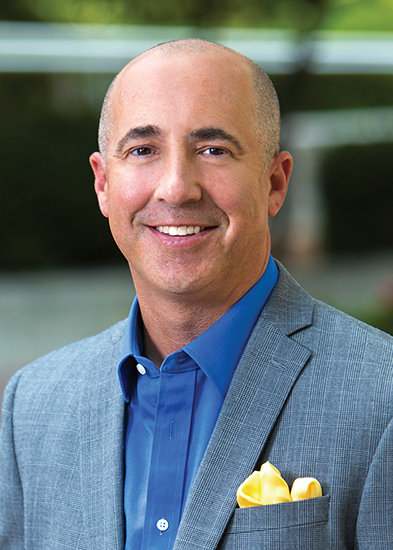
Concord, NH – February 9, 2017 – The Libertarian Party of New Hampshire (LPNH) welcomed State Representative Caleb Dyer as a new party member after Dyer recently changed his party affiliation from Republican to Libertarian. A freshman representative, Dyer became the first NH Libertarian State Representative in more than 20 years to serve the majority of their term as a Libertarian.

“Dyer is a fine example of the rare legislator who confidently puts their principles first and foremost,” said Darryl W. Perry, LPNH Chairman. “I welcome Dyer into the Libertarian Party with open arms and hope that by 2018, the NH Legislature will once again have an officially recognized Libertarian Caucus.”

Dyer lives in Pelham and represents Hillsborough 37. “I believe that it is time to demonstrate to the people of New Hampshire that such a duopoly of partisan interest, which presently controls this House, is not in their interests,” said Dyer in a prepared statement at a press conference at the Capitol. “In order to ensure the adequate representation…I truly believe the best course of action is to organize outside of the party and force coalition.”

Dyer is a lifelong resident of his district, a 2015 graduate of Alvirne High School, and was first elected in November 2016. During his 2016 campaign, Dyer was endorsed by both the NH Liberty Alliance and the Republican Liberty Caucus of NH.

“Representative Dyer is fighting for the libertarian policies that maximize individual freedom by reducing big government,” said National Libertarian Party Vice Chairman Arvin Vohra. “We thank him for the incredible courage he is showing by formally joining the Libertarian Party.

The LPNH announced that Dyer will be a featured speaker at their annual convention which will take place on March 18, 2017 from 2 p.m. – 9 p.m. at the Holiday Inn in Concord.  The key note Speaker will be Carla Howell, President of the Center for Small Government. Tickets can be purchased at LPNH.org

###

The Libertarian Party of New Hampshire is the third largest and fastest-growing political party in NH.  On July 16, 1991 Calvin Warburton, who was serving his seventh term as a Republican state representative in New Hampshire became the first sitting legislator to switch parties to the Libertarian Party. In 1992, four Libertarians were elected to the New Hampshire House of Representatives. Warburton, Andy Borsa, Don Gorman, and Finlay Rothhaus formed an officially recognized Libertarian Caucus with Gorman as the Libertarian Minority Leader.

For more information, please visit LPNH.org or find us on facebook.

These Small Business Owners Fret Over ‘Devastating’ Import Tax Pitched by House GOP Leaders

Marc Johnson (far right) is the president of Texture Technologies, a nearly 30-year-old company based in Massachusetts that exports “next to nothing” and would be taxed on its imports under a new House Republican plan. (Photo: Courtesy of Marc Johnson)

Marc Johnson runs a small business with a major footprint.

Johnson’s late father, Boine, who founded the company, and three engineers from England, helped create an instrument that measures the composition and texture of any product imaginable: baked goods, cereals, cosmetics, adhesives — to ensure they are performing well, and consistently.

Johnson imports his finished instrument from the United Kingdom, where it is produced, and sells it mostly to U.S. customers, who number more than 2,500 and include NASA, the Food and Drug Administration, Fortune 500 companies, and universities.

His nearly 30-year-old company, Texture Technologies, employs 12 people and is headquartered in Hamilton, Mass. It exports “next to nothing.” No other company sells a comparable product in the U.S., Johnson says.

As part of the most sweeping corporate tax reform plan proposed in decades, House Republican leaders aim to discourage import-intensive businesses like Johnson’s by imposing a tax on their products consumed in America, while making exported goods and services tax-free.

The plan’s authors, House Speaker Paul Ryan, R-Wis., and House Ways and Means Committee Chairman Kevin Brady, R-Texas, say their border-adjustment tax, as it’s known, would encourage companies to produce products in the U.S., and eliminate incentives for corporations to use complex schemes to shift their incomes to lower-tax countries.

But Johnson and other small businesses and retailers say the plan would raise their costs, forcing them to pass the price of that onto the consumer, and potentially cause them to lay off workers.

“If I want to keep importing and pay the tax, I am out of business,” says Johnson, 57, who estimates his federal tax bill under the House plan would soar from about $100,000 a year to $650,000 annually. “If I choose to tear down and build in the U.S., I am out of business. The whole idea of this plan is that importers like me are paying for all the exporters. Somehow, proponents think we will all be hanging around, so the government can bill us our share. But they won’t get that share because I will be out of business. That would be devastating.”

‘Entirely New System’

Supporters of the border-adjustment tax acknowledge there will be a short transition period where costs and prices might go up. But eventually, they say, things will return to normal — and be better off in the long term.

Under the plan, the corporate tax rate would fall from 35 percent — the highest such levy in the developed world — to 20 percent. Corporations would pay that 20 percent tax on their imports. At the same time, exports and other foreign sales would become tax-free.

The plan would raise money for the government in the short term — about $1 trillion over a decade, independent estimates show — to help pay for the lower tax rate.

That’s because the U.S. imports more than it exports, with an annual trade deficit of more than $500 billion.


The plan’s boosters haven’t even drafted a bill yet, but the proposal gained traction and attention after President Donald Trump last month seemed to embrace the tax on imports as a way to help pay for a border wall with Mexico. The White House later walked back that interest, saying the plan was simply “one idea” that might work to finance the wall.

Even so, some Republicans in Congress view the tax as a way to deliver the America first promise of Trump’s campaign in a way they say doesn’t resort to protectionism or risk a trade war.

“We are not cavalier about the concerns being raised, but the notion of sitting and doing nothing and not addressing fundamentally what’s at issue, which is a tax code that’s pushing manufacturing overseas, would be a lost opportunity,” said Rep. Peter Roskam, R-Ill., the chairman of the House Ways and Means Subcommittee on Tax Policy.

“So we have two choices,” Roskam told The Daily Signal in an interview. “We can do nothing, and the tax base will continue to erode, and we will wake up at some point and say what happened, why didn’t we do anything about it. Or we can go to an entirely new system that provides real growth and incentives for manufacturing in America.”

‘Don’t Kill Me’

The idea has split the business community. Major importers such as retailers — including Nike, Target, and Wal-Mart — car dealers, toy manufacturers, and oil refiners oppose the plan, warning that consumer prices will rise. Export-driven companies including General Electric, Dow Chemical, and Pfizer support the border-adjustment tax.

In interviews with The Daily Signal, Johnson, and other small business owners, said they support the premise of the plan — rewarding companies that build in America — but say shifting manufacturing here isn’t feasible for them, and would be made more difficult if they have to pay a hefty tax.

“The big picture is I know the plan wants to create incentives for me to build in the states,” Johnson says. “It’s not going to happen. I don’t have intellectual property here, or the skill set. It’s taken us 30 years to get this brilliantly produced in the way that we do. I have a beautiful line of credit. But I can’t go to the bank and say I will be in a loss position for the next seven to eight years and I want you to lend to me to build here — just to replace the revenues I am doing now. I don’t have the cash flow to wait.”

Rick Woldenberg is the CEO of Learning Resources, a third-generation family-owned company based in the Chicago suburbs that makes educational toys and employs 150 people in the U.S.

His company makes 98 percent of its products overseas, mostly in China and Taiwan.
Rick Woldenberg, CEO of Learning Resources, a family-owned company based in Illinois, worries a tax on imports would force him to raise prices. (Photo: Courtesy of Rick Woldenberg)

“American companies don’t want our business,” Woldenberg said. “Our product is very simple. It requires unskilled labor. We aren’t making a high-value item. American companies have proven they don’t want to make them.”

He said competition in the marketplace has forced him to try to “slice expenses to the bone” and find the most efficient producer overseas.

Woldenberg guessed that his federal tax rate would increase to 165 percent from 39.6 percent under the House Republican plan. He said he would have to raise prices by 10 percent to 15 percent to stay in business.

“What we are being asked to do is liquidate our company in the pockets of the government,” Woldenberg said. “They say they are trying to balance out the trade deficit, and that’s fine, but don’t kill me in the process. In trying to solve that problem, they are creating far worse inequities.”

Leveling the Playing Field

Roskam, the Republican congressman from Illinois, says he’s met with Woldenberg, and assured him and other business owners that the border-adjustment tax plan would contain “transition provisions” that phase in the tax liability that importing companies would face.

Supporters of the tax change note that other major nations impose a value-added tax — a levy imposed on domestic consumption. Compared to other countries, the U.S. has few taxes on consumption, while taxing producers more heavily. So the border-adjustment tax would level the playing field, supporters say.

“The concept of border adjustment is something every single country we compete with has,” said Brian Reardon, an advisor to the “American Made Coalition,” which supports the tax, who formerly was a special assistant to President George W. Bush for economic policy.

“All of those countries have robust retail operations and consumers are doing just fine,” Reardon told The Daily Signal in an interview. “Many of the people complaining export to those countries and pay those taxes. The idea everybody else can do it and we can’t is just nonsense.”

In addition, economists who support the plan say the dollar will rise as a result of the change, which could offset the tax increase on imports by making those same imports less expensive.

Importers such as Johnson of Texture Technologies worry that change won’t happen fast enough to offset the higher costs they’ll face.

“It’s all based on a bet,” Johnson said. “In theory, currencies will adjust and everything will be good. The whole idea that the economy will magically adjust is just people blowing smoke.”

“I am in favor of boosting exports,” Johnson added. “If the country boosts exports, then maybe more people will want to buy my product. But don’t ask the importers to pay for it. If the entire country will benefit from boosting exports, then have the entire country pay for it.”

Report by The Daily Signal's Josh Siegel.  Originally published at The Daily Signal.

Here's the Jeff Sessions photo the NAACP doesn't want you to see


Source: Twitter, @LindseyGrahamGS
Well that's awkward.


3 easy home improvement projects you can tackle right now


(BPT) - During the milder months - like summer and fall - homeowners naturally tend to prioritize working on the exterior of their houses, because the weather is nice. But in the winter, we're more apt to tackle smaller home improvement projects inside. This seems like a no brainer, right? After all, no one wants to redo landscaping when it's 35 degrees outside.


Seal out the elements


If you live in a place where heavy rain or snow are always trying to find a way into your house, know that weather can lead to serious issues in your basement or foundation. To prevent water damage and leakage stains, inspect masonry on the interior and exterior of your home. Fill any defects you find with fast-setting hydraulic cement and clean up the surface.


Once the surface is clean and dry, apply two coats of KILZ Basement & Masonry Waterproofer. This interior and exterior product is formulated for waterproofing basement walls, masonry walls, retaining walls, and cinder and concrete blocks. Once the second coat is dry, you're all set for the winter.


Start your project today


When it comes to home projects, wintertime doesn't have to mean downtime. Start your project season with any of the three ideas listed above and when warmer months roll along, you'll be ready to step out and make your home's exterior as beautiful as your interior.


With that in mind, Chip Gaines, host of HGTV's Fixer Upper and lead contractor/owner of Magnolia Homes, offers these three easy home improvement projects to help you make the most of your winter indoors.


Repaint your walls


While you're holed up inside the house decorating for the holidays or just escaping the cold, you may start noticing places on your walls in high-traffic areas with one too many scuff marks or kids' grimy handprints. Whether they come from the kids, the pets or even yourself, erasing them is quick and easy.


KILZ Hide-All primer and sealer can take care of these marks and more. This high-hiding product only needs one hour of dry time before you apply your topcoat, so there's no need to set aside a whole weekend to cross this project off your list.


Clear grout of gunk


No matter how much cleaning Gaines does at his house, he says there's one thing that's hard to keep looking clean: grout. The dirt and grime that turns your grout nasty colors can be scrubbed out, but it takes a little extra TLC. Gaines says he actually enjoys this project and finds it kind of fun because his boys like to join in and help, making it a family affair.


To clean grout at your home, he recommends wiping the surface with a wet cloth and mixing up a paste of two-parts baking soda and one-part water. Scrub it onto the grout surface using an old toothbrush or stiff-bristled brush, then rinse the area with water. If your grout lines are stained from mildew or kitchen spills, try spraying a mixture of equal parts vinegar and warm water onto the tile. It'll foam for a bit, but once it's done, scrub it well. After a final rinse, the stains should be gone.


Pension plan funding shortfalls threaten retirees in all 50 states

(BPT) - Everyone knows it is important to save for retirement in order to build a nest egg and enjoy the "golden years." So why is it that state and local governments many times act irresponsibly when it comes to saving for the future of public employees?

Government pensions are the way in which state and local public employees like teachers, police officers and firefighters receive retirement benefits. Typically both the employee and the government set aside money each year to be invested. The investments will hopefully grow over time, and both the annual contributions and the investment growth is understood to form the pool of money public employees will be able to use once they reach retirement. That's the theory.

Unfortunately, according to Unaccountable and Unaffordable 2016, a new, state-by state analysis from the American Legislative Exchange Council (ALEC), government pensions are being massively underfunded across the states, and now hardworking taxpayers are on the hook. What is the price tag? Across the 50 states, unfunded pension obligations now total $5.6 trillion. Now, that number sounds large at a national scale, but what does it mean for the average American? To be exact, this state pension debt equates to an average price tag of $17,427 for every man, woman and child in the United States.

There are numerous reasons why pension liabilities are so large. For one, the stock market is not growing as quickly as many assumed it would, exiting the recent economic downturn. Therefore, investments for many pension funds are not meeting expectations. The average pension fund assumes they will earn a whopping 7.37 percent on their investments over the long term. These overly-optimistic assumptions fly in the face of what many financial experts are calling a "new normal" of lower than expected investment earnings in the future.

Another inconvenient truth is that many state governments have failed to deposit the annually required contributions into pension funds every year. The urge to spend more money on other government projects, however well intentioned, has diverted much-needed contributions away from pensions and has contributed significantly to unfunded liabilities.

When pensions are unstable, millions of Americans are faced with an uncertain retirement. However, this is not only a problem for government workers - it affects all Americans. Without a sustainable solution to underfunded pensions, higher taxes will be the reality for all hardworking taxpayers.

What's more, an increasing percentage of state budgets are being drained to pay pension benefits, with less money available for important functions like funding public schools and fixing roads. One especially sobering story comes from Illinois, where since 2009, this trend is so extreme that 89 cents out of every new dollar of education spending has gone to teacher pensions, leaving just 11 cents for salaries, textbooks, building costs and the various in-classroom costs of education. And by 2025, Illinois will spend more on teacher-retirement costs than it will spend on the classroom.

Pension funding is not a Republican vs. Democrat issue. It's a retirement issue that affects all Americans. Unfunded pension liabilities will be harmful to the future of workers, retirees and taxpayers alike, if forward-thinking policymakers do not tackle pension reform in a timely fashion.

To find out more about how prepared your state is and to see the full report, Unaccountable and Unaffordable 2016, is available at Alec.org/PensionDebt2016.

VIDEO: Mitch McConnell shuts down Elizabeth Warren

To paraphrase Leona Helmsley, Elizabeth Warren believes rules are for the little people.

The Racist Roots of Minimum Wage Laws

There is little question in most academic research that increases in the minimum wage lead to increases in unemployment.

The debatable issue is the magnitude of the increase.

An issue not often included in minimum wage debates is the substitution effects of minimum wage increases. The substitution effect might explain why Business for a Fair Minimum Wage, a national network of business owners and executives, argues for higher minimum wages.

Let’s look at substitution effects in general.

When the price of anything rises, people seek substitutes and measures to economize. When gasoline prices rise, people seek to economize on the usage of gas by buying smaller cars.

If the price of sugar rises, people seek cheaper sugar substitutes. If prices of goods in one store rise, people search for other stores.

This last example helps explain why some businessmen support higher minimum wages. If they could impose higher labor costs on their less efficient competition, it might help drive them out of business.

That would enable firms that survive to charge higher prices and earn greater profits.

There’s a more insidious substitution effect of higher minimum wages. You see it by putting yourself in the place of a businessman who has to pay at least the minimum wage to anyone he hires.

Say that you are hiring typists. There are some who can type 40 words per minute and others, equal in every other respect, who can type 80 words per minute.

Whom would you hire?

I’m guessing you’d hire the more highly skilled. Thus, one effect of the minimum wage is discrimination against the employment of lower-skilled workers.

In some places, the minimum wage is $15 an hour. But if a lower-skilled worker could offer to work for, say, $8 an hour, you might hire him.

In addition to discrimination against lower-skilled workers, the minimum wage denies them the chance of sharpening their skills and ultimately earning higher wages. The most effective form of training for most of us is on-the-job training.

An even more insidious substitution effect of minimum wages can be seen from a few quotations.

During South Africa’s apartheid era, racist unions, which would never accept a black member, were the major supporters of minimum wages for blacks.

In 1925, the South African Economic and Wage Commission said, “The method would be to fix a minimum rate for an occupation or craft so high that no native would be likely to be employed.”

Gert Beetge, secretary of the racist Building Workers’ Union, complained, “There is no job reservation left in the building industry, and in the circumstances, I support the rate for the job (minimum wage) as the second-best way of protecting our white artisans.”

“Equal pay for equal work” became the rallying slogan of the South African white labor movement. These laborers knew that if employers were forced to pay black workers the same wages as white workers, there’d be reduced incentive to hire blacks.

South Africans were not alone in their minimum wage conspiracy against blacks. After a bitter 1909 strike by the Brotherhood of Locomotive Firemen and Enginemen in the U.S., an arbitration board decreed that blacks and whites were to be paid equal wages.

Union members expressed their delight, saying, “If this course of action is followed by the company and the incentive for employing the Negro thus removed, the strike will not have been in vain.”

Our nation’s first minimum wage law, the Davis-Bacon Act of 1931, had racist motivation.

During its legislative debate, its congressional supporters made such statements as, “That contractor has cheap colored labor that he transports, and he puts them in cabins, and it is labor of that sort that is in competition with white labor throughout the country.”

During hearings, American Federation of Labor President William Green complained, “Colored labor is being sought to demoralize wage rates.”

Today’s stated intentions behind the support of minimum wages are nothing like yesteryear’s. However, intentions are irrelevant. In the name of decency, we must examine the effects.

Commentary by Walter E. Williams.  Originally published at The Daily Signal.

It’s Time to Restore Free Speech to American Churches

For more than 60 years, the federal government has been sticking its nose where it doesn’t belong, threatening to punish houses of worship and their leaders for what they say.

The Free Speech Fairness Act was introduced in Congress earlier this week and, if enacted, would go a long way toward ending that.

Ever since 1954, when Congress enacted the Johnson Amendment, the IRS has been telling churches that it has the power to monitor their speech.

Under that law, if pastors or other clergy say anything that (in the government’s opinion) is “on behalf of (or in opposition to) any candidate for public office,” the feds can begin taxing them and potentially bring about their financial ruin.

The history behind that speech-censoring law is not what you might expect.

Most people might assume that it was part of secularists’ relentless efforts to “separate church and state.” But the story that history tells is quite different.

In the 1950s, then-Sen. Lyndon B. Johnson, D-Texas, faced stiff criticism from nonreligious nonprofit organizations. In order to silence their attacks against his future campaigns, he introduced a bill to ban all nonprofit groups from speaking for or against political candidates.

Interestingly enough, churches weren’t even the target of his proposal.

But regardless of Johnson’s intent, houses of worship nevertheless find themselves squarely within that law’s reach. And for well over half a century, they’ve had to continually wonder when their speech on some of the most pressing political issues of the day might trigger IRS scrutiny.

This tramples on the rightful role of churches.

Pastors, priests, and other clergy are called to instruct their congregants in all areas of life. The holy texts of the Abrahamic faiths have implications for everything in life, including politics and how to vote.

As Christian theologian and former Prime Minister of the Netherlands Abraham Kuyper wrote, “There is not a square inch in the whole domain of our human existence over which Christ, who is Sovereign over all, does not cry, ‘Mine!’”

The Johnson Amendment, however, carves out portions of this domain and labels them off-limits for churches unwilling to incur steep financial penalties.

The Johnson Amendment’s scope is sometimes misunderstood. It doesn’t just prohibit clergy from telling congregants who to vote for; it reaches beyond that, threatening to punish all houses of worship for saying anything that the IRS might deem to be in favor of, or in opposition to, a political candidate.

That vague guidance makes it impossible for religious leaders to know what crosses the line and what doesn’t.

Consider these scenarios: What if a pastor states in a sermon that a politician is unfit because his or her personal morality is not in line with the Bible’s teachings? Or what if a rabbi remarks that a politician’s immigration proposals do or do not honor the lessons of his faith’s sacred texts?

It’s not clear whether one, neither, or both of these examples cross the line.

But this we do know—churches and other houses of worship shouldn’t have to worry about this.

They should be free to speak on personal morality, immigration policies, and countless other issues as they relate to anything, including political candidates, and they should be free to do so without fear of government punishment.

The Free Speech Fairness Act would put an end to religious leaders’ playing this guessing game.

It would tell the federal government to stop scrutinizing what churches say about political candidates, and it would lift the muzzles that now cover America’s pulpits on the many issues that often cross into the realm of politics.

The often misunderstood idea of “separation of church and state” is a common objection to bills like the Free Speech Fairness Act. But those sorts of arguments have it exactly backwards: The Free Speech Fairness Act would actually restore (rather than undermine) a proper division between the government and the church.

Currently, bureaucrats are empowered to monitor pastors’ sermons. What could be a greater governmental intrusion into a church’s operations than that?

By removing a primary basis upon which the IRS inspects what clergy say, the Free Speech Fairness Act would put the government back in its proper place.

Over six decades ago, Texas politician Lyndon Johnson set off a chain of events that invited federal officials to meddle where they didn’t belong. The Free Speech Fairness Act says it’s high time we sent them packing.

Commentary by the Alliance Defending Freedom's Jim Campbell.  Originally published at The Daily Signal.

Why People Are Leaving Blue States in Droves

Some Americans think state boundaries and the principle of federalism are outdated relics from the past. They couldn’t be further from the truth.

New data in a report from the American Legislative Exchange Council (ALEC) paint a clear picture: States with the best policies are being rewarded with an influx of residents, and states with unattractive policies are losing residents.

Take two of the most high-tax, high-spend states in the union: New York and Illinois.

Over the last decade, New York has suffered a net loss of nearly 1.5 million residents and over 650,000 Illinoisans have moved elsewhere. Meanwhile, Texas, a right-to-work state with no income or estate tax, saw its population grow by 1.3 million.

Despite their appealing metropolitan hubs, New York and Illinois are shedding denizens.

States that scored high on the ALEC-Laffer State Economic Competitiveness Index, which takes into consideration 15 variables from the number of public employees to sales tax rates, have seen an influx of job-creating companies and taxpaying citizens over the last decade, while low-scoring blue states have been losing both.
While tax rates and labor laws are not the only factors that contribute to a state’s flourishing, the correlation between sound economic policy and private sector growth is clear.


The formula is simple. Good policy contributes to vibrant economies, and vibrant economies attract people eager for opportunity.

‘Laboratories of Democracy’

Federalism is about creating competition between the states by allowing them to craft their own respective policies, and then seeing what policies work best. This system has even more to commend it today than at the time of the founding.

Contrary to the expectations of progressive social scientists and pundits, government spending stimulates the government, but little else. A high minimum wage ultimately hurts those it is meant to serve. Progressive tax rates do not close chasmal blue state budget gaps.

Federalism is not just a boon to citizens—it is an advantage to state policymakers as well.

The states are often thought of as “laboratories of democracy.” That expression was initially coined by Justice Louis Brandeis, who ironically did not subscribe to the competitive view of federalism.

The idea is that when states implement policies, they provide test cases from which other states can learn. When a policy pays off, other states typically follow suit; when a policy is cursed by unintended consequences, other states can avoid the same pitfalls.

Many progressives claim that allowing states wide discretion to establish their own fiscal policies and regulatory regimes will result in a “race to the bottom” in which states attempt to drive out their poor and needy by decreasing welfare payments and lure in corporations by eliminating important regulations.

Political scientists have shown, however, that when it comes to welfare programs, public health regulations, and environmental protections, competition is what drives innovative and efficient solutions.

In other words, for progressives who are willing to pay the high price tag for expensive public services, there are still plenty of states willing to oblige.

Another critique of studies like the ALEC-Laffer Index is they heap too much praise on red states that implement conservative fiscal policies when, in fact, their citizens are shielded from the real downsides of fiscal conservatism—namely, limited spending on social programs.

Federal welfare policies allow frugal state governments to get credit for lowering taxes without taking the blame for cutting popular social safety net programs.

Essentially, critics argue, progressive federal policies end up subsidizing conservative state policies. As a result, states that score high on the ALEC-Laffer Index end up looking more appealing to more people.

On its face, this critique has some merit. Many of the states that score the highest on the ALEC-Laffer Index also tend to be states that get more money back from the federal government—mostly in the form of welfare payments—than they pay in taxes.

North Dakota, ranked No. 3 on the ALEC-Laffer Index, gets back $1.68 for every dollar paid in taxes. Tennessee and Oklahoma, also in the ALEC-Laffer top 10, get more back from the federal coffers than they put in as well.

Meanwhile, California, only four spots from the bottom on the ALEC-Laffer Index, gets only 78 cents back for every dollar sent to Washington. New York, dead last on the index, retrieves only 79 cents.

But federal policy also insulates residents of blue states from the full consequences of progressive fiscal policies.
Under current law, individuals can deduct their state taxes from their overall income for the purposes of determining what they owe the federal government in taxes. Thus, state politicians can hike up their tax rates without changing the effective tax rate their citizens pay.


While federal spending may make low-tax red states more appealing to residents and potential residents, the state tax deduction does the same for blue states.

Still, the broader thrust of this progressive critique is correct. Federal policy does alleviate some of the downsides that come along with both conservative and progressive fiscal policy.

A More Perfect Federalism

For the states to function as true laboratories of democracy, they should bear even more of the costs—and reap more of the rewards—of their policies.

The federal government should put more of the onus of funding and managing social welfare programs on the states and also consider eliminating the state and local tax deduction. This way, the real costs and benefits of state policies will be clear to citizens who can vote—or move—accordingly.

Were this done, the appeal of economically responsible red states would likely be even higher than ALEC’s study demonstrates it already is.

Lessons learned from state experimentation are of critical importance today.

As ALEC’s recent report shows, every one of the 50 states is wrestling with the mounting expense of unfunded liabilities caused by generous pensions and social welfare programs. Some states, like Arizona, are addressing the problem early and aggressively and others are taking note.

As state governments roll out various packages of cuts and revenue-raising measures to push themselves back into the black, they will provide test cases not just for one another, but for our radically insolvent federal government as well.

Commentary by John York.  Originally published at The Daily Signal.

How to Navigate a Financial Emergency

 
(Family Features) Your washing machine suddenly breaks down, a child requires a laptop for school or your car needs new tires. Sometimes surprise bills can be difficult to cover.

Life’s financial emergencies happen to everyone, but 6 in 10 Americans cannot cover an unexpected $500 bill without selling something or borrowing money, according to Bankrate.


As many as 70 percent of U.S. families live paycheck to paycheck, according to Alok Deshpande, founder of SmartPath Financial Education. In fact, less than 30 percent of families today have anything left at the end of the month to put in savings. That reality is echoed by a recent GoBankingRates survey, which revealed that 69 percent of Americans have less than $1,000 in savings and 34 percent don’t have any savings at all.

“When you don’t have cash for something you need, there are many different financing options available. However, few realize that many of these options can lead to a debt spiral that can be difficult to pull out of,” said Richard Carrano, CEO of Purchasing Power, an employee purchase program offering consumer products and services through payroll deduction at the workplace.

“Regrettably, circumstances and bank accounts don’t always align. That’s why it’s so important to be ‘credit educated’ – to understand hidden costs and fees associated with high-risk credit options and avoid making financial mistakes that can hound you months, even years later.”

Buying items on sub-prime credit or through high-interest vehicles like payday or title loans can be risky propositions, particularly if you have a low credit score to begin with. Understanding your options can help ensure you make the best choice to meet your short-term needs without compromising your long-term finances. Consider the following:

Cash:
Paying cash for a major purchase makes the most sense in terms of avoiding exorbitant fees and preventing credit dings from missed payments. However, cash may not always be readily available.

Credit cards:
Chances are, even with a shaky financial history, you can find a creditor willing to offer you a line of credit, but you’ll likely have a steep annual percentage rate that accrues each month. Furthermore, if you’re unable to repay more than the monthly minimum, you could end up carrying that debt for years before it’s fully paid down.

Employee purchase programs:
Research shows that financial stress at home regularly impacts employee productivity at work. This leads many employers to offer an employee purchase program such as Purchasing Power, which allows you to buy what you need through automatic paycheck deductions over a 12-month period. There’s no credit check, zero interest and no hidden fees. There’s also a free financial wellness platform to help with budgeting, credit reports and personal coaching. Learn more at PurchasingPower.com.

Rent to own:
With rent-to-own products, you pay a monthly principal amount plus service fees and taxes for a period of time, up to completing the rental agreement and owning the item outright. While the monthly rate makes items like appliances and furniture immediately accessible, be wary of the long-term cost. Renters can end up paying as much as three times the retail value of an item before satisfying the terms for ownership.

Payday/Title loans:
Essentially, these loans function as a loan against a future paycheck or your vehicle. They often come with high percentage rates and fees, as well as extremely short repayment schedules. Rely on these loans only if you are certain you can cover the entire loan and associated fees by the designated due date.

Whatever option you choose for emergency financing, understanding the repercussions can help you long-term.

Main image (couple budgeting) courtesy of Getty Images
SOURCE:
Purchasing Power

Changing the end of life care conversation

(BPT) - Hospice and palliative care services help people with illnesses no longer responding to curative treatment face death on their own terms, most often at home or in a familiar setting. No matter where a person chooses to receive these services, hospice staff can guide them and their families through difficult decisions surrounding end-of-life care.

Many families feel overwhelmed when told by a physician that a loved one has six months or less to live. A physician may use the terms “palliative care” or “hospice care,” which often raises questions about the details regarding these services.


Both hospice and palliative care are patient- and family-centered health care options that address physical, emotional and spiritual pain. Hospice is limited to terminally ill patients who meet Medicare’s eligibility requirements and focuses on enhancing comfort and quality of life during the final months of life — without curative intent. Palliative care is available regardless of the diagnosis and may or may not include curative options along with relief from the symptoms, pain and stress of a serious illness. Families of patients in hospice care gain access to caregiver education and training, help with difficult decisions, respite care, and bereavement services, among others.


There is no "One size fits all"

Hospice and palliative care can be delivered at home, in a nursing home, a dedicated hospice facility or an acute care hospital. These services have come a long way since the first U.S. hospice facility opened in Branford, Connecticut in 1974.


According to Joseph Shega, MD, senior vice president and national medical director for VITAS Healthcare, the nation’s leading provider of end-of-life care, “we started as pioneers in this area of health care about four decades ago and it has been gratifying to see how the practice of hospice and palliative care has truly transformed the way people think about and manage end-of-life experiences.” He explains that “it’s so important to preserve comfort, respect and dignity in the face of terminal illness.”


A growing number of Americans are choosing to access hospice services, which are covered by Medicare, Medicaid and most private insurance. In 2014, the National Hospice and Palliative Care Organization (NHPCO) reported nearly 2 million Americans received hospice care, and according to AARP, among those 50 to 64 years old, 71 percent want to "age in place," in their own homes. When people are in control of where and how they face the end-of-life, they can focus more time on experiencing meaningful moments with loved ones.


How to start "The conversation"

If you were unable to speak for yourself, do your loved ones know what kind of medical care you would want? Do you know what they would want?


Having a conversation about end-of-life care and advance directives may not be the easiest conversation you’ll ever have, but it is one of the most important.


Despite the topic’s importance, only 27 percent of Americans report having talked with their families about end-of-life care. The best way to make your medical wishes known is to create an advance directive and share it with your family and your doctor.


Have the conversation and don’t wait for a crisis. Failing to communicate healthcare choices can lead to anguish, family conflicts and unintended costs that can result when patients no longer can tell their loved ones what kind of care or which “heroic measures” they would accept or reject.


Talk to your loved ones—briefly, in depth, frequently, lightly, seriously—about your wishes. We suggest using milestone events—wedding, anniversary, birthday, retirement, graduation, downsizing move, family holiday—to hold “what if” conversations with loved ones. Keep it light but heartfelt. You may be surprised: letting your loved ones know your wishes could start a frank conversation among the generations about terminal illness, funerals, religious beliefs and other end-of-life concerns.


If you or a loved one is ready to talk about end-of-life care options or would like to find out more about hospice care or how to start the conversation, VITAS can help. Visit www.vitas.com/hospicemonth or call 1-877-531-6798.

How Fewer Manufacturing Jobs Can Be Good for Workers and the Economy

Politico reports that Donald Trump may not have a Council of Economic Advisors, the White House’s in-house think tank. Upon hearing that, former Obama White House CEA chair Austin Goolsbee tweeted: “If you never want to hear-even privately-that your idea will cost X/have these effects/needs more thought, you should definitely ban the CEA.”

Which got me thinking: What sorts of things might a proper Trump CEA tell Trump? Maybe that superfast economic growth is very, very hard.  Maybe that we can’t grow out way out of the entitlement debt problem. Maybe that selling health insurance across state lines won’t revolutionize the insurance marketplace.

And maybe the CEA economists would show Trump these two charts:


The above charts are taken from a Martin Wolf column in the Financial Times, with this bit of explantion:
The main explanation for the long-term decline in the share of manufacturing employment in the US (and other high-income economies) has been the rise in employment elsewhere. In 1950, employment in manufacturing was 13m, while that in the rest of the economy was 30m. By the end of 2016, it was 12m and 133m, respectively. Thus, all the increase in employment between 1950 and the end of 2016 occurred outside manufacturing. Yet output of US manufacturing was not stagnant. Between 1950 and 2016, output rose 640 per cent, while employment fell 7 per cent. Even between 1990 and 2016 output rose 63 per cent, while employment fell 31 per cent. The explanation for the contrast between output and employment is rising productivity.

Republished from AEI.
James Pethokoukis
James Pethokoukis
James Pethokoukis is a columnist and blogger at the American Enterprise Institute. Previously, he was the Washington columnist for Reuters Breakingviews, the opinion and commentary wing of Thomson Reuters.
This article was originally published on FEE.org. Read the original article.

Shutting Out Immigrants Could Cost America Trillions

President Donald Trump’s immigration ideas may have already cost America trillions of dollars — with perhaps even more economic damage on the way.

Reputation to Protect


See, America has a reputation. And that reputation is worth something. Quite a lot actually. A nation with a good reputation — such as one of tolerance and trustworthiness — has enhanced influence to achieve desired economic and geopolitical outcomes without force or cutting checks. A decent rep also makes a country a more attractive destination for capital, both financial and human.

So how do you think Brand America is doing these days?

It was actually pretty strong before the 2016 election, at least as imperfectly measured by Anholt-GfK Nation Brands Index. America’s global ranking jumped from seventh to first when Barack Obama was elected and has remained at or near the top since.

The U.S. was first last year, too, but still saw a sizable drop in global perceptions. It’s hard to imagine that the Trump immigration and refugee travel ban — and the accompanying chaos — has done much to reverse that slide. If the Obama bump boosted the value of Brand America by some $2 trillion, how much has the Trump slump possibly hurt it?

But there’s an even bigger risk to U.S. prosperity: What if foreigners no longer see America as a welcoming place? Many potential immigrants to America just might take “no” for an answer and decide to go elsewhere or stay home. Already, Canadian immigration lawyers have reportedly been flooded with inquiries from U.S.-based engineers and computer scientists.

This should all be alarming for an economy that has benefited so much from attracting the world’s best and brightest. Roughly half of U.S.-based unicorns — technology startups worth at least $1 billion — were founded by immigrants, with India the top nation of origin.

Race for Talent

As venture capitalist Paul Graham tweets, “This is a good time to remember that without immigration the U.S. will only have 5 percent of the top people in each field.” And more to the point regarding the Trump ban, as The Atlantic notes, “Iranian-Americans founded or hold leadership positions at Twitter, Dropbox, Oracle, Expedia, eBay, and Tinder.”

The global race for talent is becoming ever more competitive, especially as Asian economies modernize and increase their demand for highly skilled labor. A 2014 University of Washington study, using LinkedIn data to monitor global worker migration, vividly shows how America is no longer the only game in town. While 27 percent of migrating professionals in its sample group chose the U.S. as a destination in 2000, just 13 percent did in 2012.

The biggest drop was among those in the science, technology, engineering, and math fields — to 15 percent from 37 percent. In addition, the study found the share of graduates from the top 500 universities worldwide coming to America had also fallen by half.

Of course, almost every consultant and think-tank plan for boosting U.S. innovation and economic growth at least partly depends on sharply boosting high-skill immigration. Like this one from the McKinsey Global Institute:
The nation could generate tremendous impact on productivity in the near term and beyond 2020 by increasing the annual flow of high-skilled immigrants. This can be done by increasing the number of skilled H-1B visa holders, giving preference to visas for extended relatives of permanent residents who have specialized skills or tertiary degrees, and streamlining the visa process for skilled workers and entrepreneurs. [McKinsey Global Institute]
Sounds great, right? But pretty much every advanced economy is trying to play the same game. And probably none of those countries currently have their technology industry — a magnet for super-smart immigrants — physically protesting and legally attacking their nation’s immigration policies. It’s hard to see how America gets from Trump’s immigration order to the expansive vision put forward by some of the most aggressive immigration advocates.

In his book The Upside of Inequality, former Bain Capital executive Edward Conard outlines a plan to supercharge U.S. growth by restricting immigration to top-scoring math and science majors from around the world, maybe 5 to 10 million immigrants. Team Trump can fiddle with immigration policy all it wants to attract potential superstar immigrants like Google’s Sergey Brin or Tesla’s Elon Musk. But the results may disappoint if America is now seen as deeply intolerant.

The Flip-side


Then again, perhaps Team Trump could care less. Senior Trump adviser Stephen Bannon has complained that American engineering schools are “are all full of people from South Asia and East Asia. . . . They’ve come in here to take these jobs.” He has also suggested it’s a problem when “two-thirds or three-quarters of the CEOs in Silicon Valley are from South Asia or from Asia.”

No worries, then. The Trump administration looks to be well on its way to finding a solution to Bannon’s concerns.

James Pethokoukis
James Pethokoukis
James Pethokoukis is a columnist and blogger at the American Enterprise Institute. Previously, he was the Washington columnist for Reuters Breakingviews, the opinion and commentary wing of Thomson Reuters.
This article was originally published on FEE.org. Read the original article.

Nuns Respond to Draft of Trump Religious Freedom Executive Order


After a draft of a religious freedom executive order from President Donald Trump was leaked to the media, a group of Catholic nuns have once again found themselves in the spotlight.

“I am aware of the draft executive order that seems to be circulating as of the last couple of days,” Sister Constance Veit, director of communications for the Little Sisters of the Poor in the U.S., told The Daily Signal on Friday. “It’s just a very hopeful sign that things could be coming to an end.”

The Little Sisters of the Poor are a group of nuns who care for the elderly poor. Under Obamacare, they argued the government refused to accommodate their pro-life religious beliefs by forcing them to be involved in the coverage of contraceptives and abortifacients.

Among other things, Trump’s draft executive order would instruct the secretaries of health and human services, labor, and treasury to grant relief to the Little Sisters of the Poor.

In the video above, Veit addresses some of the criticisms that involve the executive order, including allegations that it would enable discrimination.

Report by The Daily Signal's Kelsey Harkness. Originally reported at The Daily Signal.

Pro-Life Lawmakers: Planned Parenthood Shouldn’t Get Another ‘Dime of Taxpayer Dollars’

Live Action President Lila Rose is flanked by members of Congress as she addresses the media. (Photo: Caleb Ecarma)
Pro-life advocacy group Live Action, joined with members of Congress, called Feb. 2 for the ending of taxpayer funding of Planned Parenthood, the nation’s largest abortion provider.

“I hope that the sands of time blow over that Capitol dome before we ever give one more dime of taxpayer dollars to this insidious, deceptive, and evil enterprise,” said Rep. Trent Franks.

The Arizona Republican likened pro-Planned Parenthood talking points to “fake news” and “alternative facts.”

“Those of you in the media have had a lot of talk about fake news and alternative facts, and I would just say that, I can think of no organization in the recent history of the world that has deceived the world more than Planned Parenthood,” said Franks.

“The truth is, Planned Parenthood is the largest perpetrator or abortion in America, mercilessly killing some 300,000 human babies every year … and they want taxpayers to be forced to pay for it,” he added.

Planned Parenthood receives annually around half a billion dollars of taxpayer money.

“We’re borrowing money from China to fund Planned Parenthood to kill the future of America and it’s got to end,” said Rep. Steve King, R-Iowa. “If we fail to [defund Planned Parenthood] in this 115th Congress, then shame on us.”

Rep. Diane Black, R-Tenn., a nurse-turned-congresswoman, mentioned the Live Action videos. In one video, 92 separate Planned Parenthood clinics turned away women who were searching for prenatal care, while in another video, 65 Planned Parenthood clinics refused women who wanted an ultrasound.

“I have spent my career protecting the health of women, children, and families, but as we see in these investigative videos, Planned Parenthood is not about women’s health care, it’s an abortion enterprise,” Black said.

Black appealed to her fellow members of Congress to follow the voting trends of the American people.

“Last fall, Americans went to the polls and rejected Planned Parenthood’s callous extremism. Now it’s time for Congress to do the same,” Black said.

Rep. Vicky Hartzler, a Republican congresswoman from Missouri, outlined Planned Parenthood’s lack of adoption referrals, prenatal care, and ultrasounds for women seeking to carry their child to term.

“The mission of this organization is to take life, not provide health care for women and their children … two patients enter their clinics, and only one leaves alive,” Hartzler said.

Live Action, a pro-life investigative group, provides news on abortion issues to over 2 million social media followers.

Lila Rose, the president and founder of Live Action, hosted the press conference right outside the House of Representatives. In addition to Black, King, Franks, and Hartzler, Reps. Ann Wagner, R-Mo.; Jodey Arrington, R-Texas; Doug Lamborn, R-Colo.; and Robert Pittenger, R-N.C., attended.

This article has been corrected. Rep. Jodey Arrington, R-Texas, did not attend the press conference.

Report by The Daily Signal's Caleb Escarma.  Originally published at The Daily Signal.

5 tips to protect your devices from cybercrime

(BPT) - Your smartphone, your tablet, your computer - they are some of your most important and most used possessions. They are the daily tools you use for research, to connect with others and make purchases. You take them everywhere and fill them with your important, personal information.

And all of that makes them the perfect targets for a cyberattack.


The number of cybercrime incidents in the United States grows each year, and as Americans move into an increasingly digital society - thanks to smart phones, smart cars and smart in-home technologies - cybercrime is expected to grow in frequency again in 2017. Protecting yourself, your family and the vital information on your devices means increasing your focus on your own cybersecurity. That starts with these five tips.


* Recognize you're not immune.
 Cyberattacks increase in frequency and severity every year, so don't make the mistake of believing it can't happen to you. "It's important to protect yourself by taking personal responsibility for your data; we can't expect banks or other institutions to do it for us," said Jim Karagiannes, Ph.D., professor in DeVry University's College of Engineering & Information Services. "We lock our doors and take other security measures to protect our home and car. We need to also take precautions with our personal security and information."


* Don't store your username, password or credit card information with a website.
 The convenience makes it tempting, but websites are a popular target for cybercriminals because a successful hack gives them access to hundreds or thousands of files, including yours. Even storing this information on your own computer can expose it in a cyberattack, and if your credit card information is captured, criminals can use it to gather your social security number. That exposes you to identify theft. Keep this information off your devices and, instead, create complex passwords and write down all of your usernames and passwords on a piece of paper that you keep in a safe place, such as a deposit box.


* Use only a credit card, not a debit card, when making online purchases.
 Using your credit card instead of your debit card allows you to keep better track of the purchases you have made. It also limits the effects of any possible theft to just the one card instead of several. If you have no choice but to use a debit card for an online purchase, do not use your pin number online.


* If it feels like a trick, it probably is.
 Cybercriminals often engage in "social engineering" or other non-electronic methods to try and trick you into surrendering your data. If you get a phone call about a banking or credit card issue or if your computer tells you to call a number because it just caught a virus, be cautious. Do not divulge any personal history or credit card details. Hang up or ignore the computer-generated notices and call the customer service number of the institution's website with any questions.


* Replace your existing credit cards with chip cards as soon as possible.
 Chip cards are becoming the new normal these days, and if your current credit card does not have a silver square chip on its front, consider replacing it quickly. Popularized in Europe, chip cards possess the necessary encrypted information to eliminate delays in the transaction process. Doing so closes the window criminals need to steal your personal information, thus protecting you from identity theft. 

You have no intention of abandoning your devices, of course, so protect them. Following the tips above will help better secure your technology and personal information from the threats of cybercrime so you can enjoy your devices with greater peace of mind.

Who Was the Founding Father of the Fourth Amendment?

February 5 marks the birth of the American who had the greatest hand in what became the 4th Amendment’s prohibition of unreasonable searches and seizures – James Otis. Unfortunately, “one of the most passionate and effective protectors of American rights” is too-little remembered today.  

Otis’ efforts applied the celebrated English maxim, “Every man’s house is his castle” – or, as William Pitt said in Parliament in 1763, that “The poorest man may in his cottage bid defiance to all the force of the crown” – to the colonies, in resistance to Crown-created writs of assistance. They were broad search warrants enabling customs officials to enter any business or home without advance notice, probable cause, or reason, which Otis asserted were unconstitutional.

Otis was an advocate general in the vice-admiralty court with responsibilities including prosecuting smuggling, to which Britain’s onerous trade restrictions had turned many. But when the Crown imposed writs of assistance to crack down, Otis resigned his post in protest and represented, without charge, Boston merchants’ efforts to stop the writs. For five hours he argued that they violated citizens’ natural rights, putting them beyond Parliament’s powers. A young John Adams listened to Otis’ oration, at which “the child's independence was then and there born.”


Otis lost the case, but public wrath discouraged officials from employing the writs. Otis then became influential, his role growing with American grievances. He led the Massachusetts Committee of Correspondence in 1764. He wrote pamphlets. He argued against Parliament’s power to tax colonists, particularly in
The Rights of the British Colonies Asserted and Proved, and was a leader at the Stamp Act Congress. Otis joined Samuel Adams to pen a circular to enlist other colonies in resisting the Townshend Duties.

John Adams said, “I have never known a man whose love of country was more ardent or sincere, never one who suffered so much, never one whose service for any 10 years of his life were so important and essential to the cause of his country, as those of Mr. Otis from 1760 to 1770.” Why then is he not better remembered? Because he then began suffering bouts of mental illness which ended his contributions before the Revolutionary War, whose many American heroes have eclipsed him in memory.


However, “search and seizure” issues permeate Americans' liberties today. These include the exclusionary rule’s prohibition against admitting evidence gathered in violation of the 4
th Amendment at trial and injured parties’ power to sue officers involved for damages suffered in unlawful searches. But they also include government spying on its citizens, as Edward Snowden’s leaks revealed, and questionable cell phone searches, in which, as Justice Anthony Kennedy’s words, “someone arrested for a minor crime has their whole existence exposed.” Such issues make it well worth revisiting Otis’ highly consequential insights.

James Otis’ argument was based on our liberty because we “are by the law of nature free born,” and that “[every] act against natural equity is void.” In consequence,

The end of government being the good of mankind … It is above all things to provide for the security, the quiet and happy enjoyment of life, liberty, and property. There is no one act which a government can have a right to make, that does not tend to the advancement of the security, tranquility and prosperity of the people
Otis took our liberty, drawn in broad brushstrokes, and applied it specifically to our homes and possessions. He asked, “Can there be any liberty where property is taken away without consent?” and asserted that “One of the most essential branches of … liberty is the freedom of one’s house,” which writs of assistance steamroll. As he put it,
A man’s house is his castle; and whilst he is quiet, he is as well guarded as a prince in his castle. This writ … would totally annihilate this privilege. Custom-house officers may enter our houses when they please … break … everything in their way; and whether they break through malice or revenge, no man, no court may inquire.
Otis then asked what the consequence of violating those principles now articulated in our 4th Amendment would be. His answer was tyranny. “Everyone with this writ may be a tyrant.” And tyrannical violations of our rights that have occurred create no authorizing precedent.
[Even] if every prince…had been a tyrant, it would not prove a right to tyrannize. There can be no prescription old enough to supersede the law of nature, and the grand of God almighty; who has given to all men a natural right to be free.
Because “Tyranny of all kinds is to be abhorred,” Otis’ offered a principled and profound response:
I will to my dying day oppose, with all the powers and faculties God has given me, all such instruments of slavery on the one hand and villainy on the other, as this Writ of Assistance is.
The 4th Amendment is one of the most important playing fields on which the battle between liberty and tyranny is waged. That makes revisiting James Otis’ understanding critical. As Law Professor Thomas K. Clancy wrote:

James Otis first challenged British search and seizure practices and offered an alternative vision of proper search and seizure principles. No authority preceding Otis had articulated so completely the framework for the search and seizure requirements that were ultimately embodied in the Fourth Amendment.

Gary M. Galles
Gary M. Galles
Gary M. Galles is a professor of economics at Pepperdine University. His recent books include Faulty Premises, Faulty Policies (2014) and Apostle of Peace (2013). He is a member of the FEE Faculty Network.
This article was originally published on FEE.org. Read the original article.

How to Use Turmeric From Morning to Night


Section Image

(Family Features) From the celebrity on TV to your coworker at the watercooler, everyone is talking about turmeric. That’s because scientific evidence has been building around the potential health benefits, including anti-inflammatory properties, of curcumin, a compound in turmeric. These six tempting recipes – from a morning shake to baked chicken – will quickly make turmeric the new star of your spice cabinet. Find more tips for using turmeric at McCormick.com.

 
  1. Chocolate Banana Shake with Turmeric and Cinnamon – Take breakfast to go with a scrumptious shake made with a turmeric cocoa spice blend, roasted pistachios, frozen bananas and sweet dates.

  1. Creamy Coconut Butternut Squash Soup – This cozy classic balances the sweet and savory flavors of coconut milk and butternut squash.

  1. Turmeric Vinaigrette – Add earthy goodness to an everyday salad with this simple vinaigrette, made with turmeric, ginger, honey and sea salt.

  1. Creamy Turmeric Dip – Turmeric, sea salt, cinnamon, lemon juice and low-fat yogurt come together for a tasty dip that’s ready in just 5 minutes. Pack with vegetables and pita chips and take to work for a mid-afternoon snack.

  1. Honey Mustard Turmeric Chicken – Take baked chicken up a notch with a twist on everyone’s favorite sweet and tangy honey mustard marinade.

  1. Golden Turmeric Milk – Combine coconut milk, turmeric, vanilla and pumpkin pie spice to make this popular pick-me-up beverage.
SOURCE:
McCormick