How the Black Market Is Saving Two Countries from Their Governments


Ever since governments began banning and licensing different parts of the economy, the black market has made sure people still have access to the things they need. Unstable governments always turn on their own citizens using price controls, heavy taxes, and even the threat of imprisonment to prop up their failing systems. As conditions inevitably deteriorate, as they have in Venezuela and Greece, the underground economy becomes invaluable to those living through the crisis.

Markets Survive in Venezuela

The shadow economy refers to more than just the trade of illegal goods. A grey market, for example, provides legal products distributed through illegal channels. Since basic things like toilet paper, medicine, and even food have disappeared from store shelves in Venezuela, the peer-to-peer network has become the only reliable way to secure life’s necessities. In desperate situations like this, the existence of independent merchants can mean the difference between life and death.

Even the value of Venezuela’s currency has started to move away from the government’s control.  At one point, the official exchange rate was fraudulently set at 10 bolivars per U.S. dollar, while on the black market it was trading at 1,000 to one. This action hurt millions by suppressing wages across the country and eroding any remaining trust. Inflation has quickly become the most imminent threat to the Venezuelan people, stealing the value of their labor and savings. For years, the bolivar has experienced hyperinflation, increasing the cost of living almost exponentially.

The State’s desperate response was to institute price controls, but that has only led to shortages across the board. Luckily, the unregulated markets have been able to determine the true value of goods and provide vital support for the struggling communities. Many people think that so-called price gouging is unethical, but isn’t it better to buy what you need at twice the price than to not be able to get it at all?

Black Markets Amid Greek Fiscal Mayhem

Greece is going through a transformation of its own — but in response to a very different set of circumstances. The Greek people have endured a series of tax increases and pension cuts over the past several years to fund debts owed to the European Union. These austerity measures have created a dire situation for those trying to secure their financial independence. The result has been widespread tax evasion, which has helped grow Greece’s underground economy to nearly 25% of the country’s GDP.

Surprisingly, it’s not only the poor who are utilizing the shadow economy in Greece, but also the professional class. Those earning large amounts of money are subjected to extremely high tax rates, driving many business owners and entrepreneurs to either seek better opportunities abroad or take steps to conceal their income.

By persecuting the most successful members of society and not allowing them to keep what they earn, authorities are only encouraging disregard for the law. Without the grey market in Greece, many more skilled workers would have already left the country. Even though the black market is consistently blamed for taking away tax revenues, it ironically may be the only thing keeping the debt crisis from spiraling even further out of control.

Scarcity and the Consolidation of Power

Scarcity is more than just a mindset; it’s a harsh reality that people born in developed nations rarely see firsthand. But any time a bankrupt government seizes control over their citizens’ lives and the economy, the end result is always despotism. The consolidation of power into the hands of a few is rationalized during chaotic times but ultimately puts the rights of all citizens at risk.

Just last year, Venezuelan law enforcement carried out raids that killed 245 people. There was no accountability regarding whether the shootings were justified, but reports claim that many of the victims posed no threat and some were even killed after being taken into custody. Such violent crackdowns are the inevitable result of governments attempting to maintain control amid the chaos of broken economic systems.

In 2011, Robert Neuwirth wrote a report for Foreign Policy that highlighted the importance of this untaxed, unlicensed, and unregulated global marketplace. He called it “System D.”
“They say that inventive, self-starting, entrepreneurial merchants who are doing business on their own, without registering or being regulated by the bureaucracy and, for the most part, without paying taxes are part of ‘l’economie de la débrouillardise.’ (Literally 'Economy of Resourcefulness') or, for street use, ‘Systeme D.’ This essentially translates as the ingenuity economy, the economy of improvisation and self-reliance, the do-it-yourself, or DIY, economy.”
The nanny state has done an excellent job attacking anything outside of the government’s jurisdiction, but a lack of regulation is what allows for the most rapid growth and productivity. Legislators notoriously overestimate their influence on the millions of people they attempt to rule over, but ultimately, grassroots decisions made by individuals have the greatest impact. People who rely on their own skills and reputation rather than a bureaucratic stamp of approval are labeled criminals, but they’re the ones providing real value to society in many cases.

Our Black Market Future

Merchants in these off-grid markets are often associated with danger and violence, but in reality, they provide the purest form of voluntary transactions. Negative aspects, like organized crime, are only made possible because of the profits created as a result of prohibition. Without the State intimidating the public at gunpoint, there would be no incentive for people to seek out the services of nefarious organizations.

These organic free markets are only strengthened with the circulation of assets like cash, bitcoin, and precious metals. Anonymity mixed with technology is empowering people in ways never imagined. The adoption of cryptocurrencies is bringing the shadow economy into the digital age and expanding its reach internationally. This new economic system represents a very real threat to the current financial and political structures.

However, innovators in this environment have to be careful, and after the Silk Road was taken down, real legal implications became apparent. Most famously, Silk Road co-founder Ross Ulbricht was sentenced to life in prison and targeted specifically for challenging the existing system.

The growing progression towards decentralization he attempted to catalyze is on a direct collision course with the central banks and their war on cash.  As the public’s faith in fiat money continues to wane, there will be more and more opportunities to show the benefits that come from peer-to-peer networks over central planning. Those who recognize the inherent extortion of the old system have to lead by example and educate others, regardless of which tactics of intimidation are deployed against them.
Republished from The Anti-Media.
Shaun Bradley
Shaun Bradley writes at TheAntiMedia.org
This article was originally published on FEE.org. Read the original article.

How Communism Became the Disease It Tried to Cure


From Radical Revolutionaries to Privileged Bureaucrats

The great German sociologist, Max Weber (1864-1920) offered an understanding of the evolution of socialist regimes in the twentieth century from revolutionary radicalism to a stagnant system of power, privilege and plunder, manned by self-interested Soviet socialist office holders.

Max Weber, in his posthumously published monumental treatise, Economy and Society (1925), defined a charismatic leader as one who stands out from the ordinary mass of men because of an element in his personality viewed as containing exceptional powers and qualities. He is on a mission because he has been endowed with a particular intellectual spark that enables him to see what other men do not, to understand what the mass of his fellow men fail to comprehend.

But his authority, Weber explains, does not come from others acknowledging his powers, per se. His sense of authority and destiny comes from within, knowing that he has a truth that he is to reveal to others and then knowing that truth will result in men being set free; and when others see the rightness of what he knows, it becomes obvious and inevitable that they should follow his leadership.

Certainly Vladimir Lenin (1870-1924) fit that description. While many who met or knew him pointed out his either non-descript or even unattractive physical appearance and presence, most emphasized at the same time Lenin’s single-mindedness of being on a “mission” for which he had absolute confidence and unswerving determination, and due to which others were drawn to him and accepted his leadership authority.

Surrounding Lenin, the charismatic, was an array of disciples and comrades who were called and chosen, and saw themselves as serving the same mission: the advancement of the socialist revolution. As Weber says:
“The . . . group that is subject to charismatic authority is based on an emotional form of communal relationship . . . It is . . . chosen in terms of the charismatic qualities of its members. The prophet has his disciples . . . There is a ‘call’ at the instance of the leader on the basis of the charismatic qualification of those he summons . . .”
The “chosen” group renounces (at least in principle, if not always in practice) the material temptations of the worldly circumstances, which the goal of their “mission” is meant to overthrow and destroy. And, this too, marked the often conspiring, secretive and sometimes Spartan lifestyle of Marxist revolutionaries. Max Weber explained:
“There is no such thing as salary or a benefice. Disciples or followers tend to live primarily in a communistic relationship with their leader . . . Pure charisma . . . disdains and repudiates economic exploitation of the gifts of grace as a source of income, though to be sure, this often remains more an ideal than a fact . . . On the other hand, ‘booty’. . . whether extracted by force or other means, is the other typical form of charismatic provision of needs.”
But once the charismatic and his followers are in power, a transformation soon occurs in their behavior and relationship to the rest of the society. Now it becomes impossible to stand outside of the flow of the mundane affairs of daily life. Indeed, if they do not immerse themselves in those matters, their power over society would be threatened with disintegration. Slowly, the burning fervor of ideological mission and revolutionary comradeship begins to die. Said Max Weber:
“Only the members of the small group of enthusiastic disciples and followers are prepared to devote their lives purely and idealistically to their calling. The great majority of disciples and followers will in the long run ‘make their living’ out of their ‘calling’ in a material sense as well . . . Hence, the routinization of charisma also takes the form of the appropriation of powers of control and of economic advantages by the followers and disciples and the regulation of the recruitment of these groups . . .
Correspondingly, in a developed political body the vassals, the holders of benefices, or officials are differentiated from the ‘taxpayers.’ The former, instead of being ‘followers’ of the leader, become state officials or appointed party officials . . . With the process of routinization the charismatic group tends to develop into one of the forms of everyday authority, particularly . . . the bureaucratic.”
I would suggest that in Max Weber’s analysis we see the outline of the historical process by which a band of Marxist revolutionaries, convinced that they saw the dictates of history in a way that other mere mortals did not, took upon themselves to be the midwives of that history through violent revolution.

But as the embers of socialist victory cooled, such as in Russia after the Revolution of 1917 and the bloody three-year civil war that followed, the revolutionaries had to turn to the mundane affairs of “building socialism.” Building socialism meant the transformation of society, and the transforming of society meant watching, overseeing, controlling and commanding everything.

Self-Interest and the New Socialist “Class Society”

Hence, was born in the new Soviet Union what came to be called the Nomenklatura. Beginning in 1919, the Communist Party established the procedure of forming lists of government or bureaucratic positions requiring official appointment and the accompanying lists of people who might be eligible for promotion to these higher positions of authority. Thus was born the new ruling class under socialism.

Ministries needed to be manned, Party positions needed to be filled, nationalized industries and collective farms needed managers assigned to supervise production and see to it that central planning targets were fulfilled, state distributions networks needed to be established, trade unions needed reliable Party directors, and mass media needed editors and reporters to tell the fabricated propaganda stories about socialism’s breakthrough victories in creating a new Soviet Man in his new glorious collectivist society.

Contrary to the socialist promises of making a new man out of the rubble of the old order, as one new stone after another was put into place and the socialist economy was constructed, into the cracks between the blocks sprouted once again the universals of human nature: the motives and psychology of self-interested behavior, the search for profitable avenues and opportunities to improve one’s own life and that of one’s family and friends, through the attempt to gain control over and forms of personal use of the “socialized” scarce resources and commodities within the networks and interconnections of the Soviet bureaucracy.

Since the state declared its ownership over all the means of production, it was not surprising that as the years and then the decades went by more and more people came to see membership in the Nomenklatura and its ancillary positions as the path to a more prosperous and pleasant life. In the end, the socialist state did not transform human nature; human nature found ways to use the socialist state for its own ends.

The system of privilege and corruption that Soviet socialism created was explained by Boris Yeltsin (1931-2007), the Russian Communist Party member who, more than many others, helped bring about the end of the Soviet Union and an independent Russia in 1991 that at first tried democracy. In his book, Against the Grain (1990), Yeltsin explained:
“The Kremlin ration, a special allocation of normally unobtainable products, is paid for by the top echelon at half its normal price, and it consists of the highest-quality foods. In Moscow, a total of 40,000 people enjoy the privilege of these special rations, in various categories of quantities and quality. There are whole sections of GUM – the huge department store that faces the Kremlin across Red Square – closed to the public and specially reserved for the highest of the elite, while for officials a rung or two lower on the ladder there are other special shops. All are called ‘special’: special workshops, special dry cleaners, special polyclinics, special hospitals, special houses, and special services. What a cynical use of the world!”
The promised “classless society” of material and social equality was, in fact, the most granulated system of hierarchical privilege and power. Bribery, corruption, connections and favoritism permeated the entire fabric of Soviet socialist society. Since the state owned, produced and distributed anything and everything, everyone had to have “friends,” or friends who knew the right people, or who knew the right person to whom you could show just how appreciative you could be through bribery or reciprocal favors to gain access to something impossible to obtain through the normal channels of the central planning distributive network for “the masses.”

And overlaid on this entire socialist system of power, privilege and Communist Party-led plunder was the Soviet secret police, the KGB, spying, surveilling and threatening anyone and everyone who challenged or questioned the propaganda or workings of the “workers’ paradise.”

Communist Contradictions and the End to Soviet Socialism

It is not an exaggeration to say that everything that the Marxists said was the nature of the capitalist system – exploitation of the many by a privileged few; a gross inequality of wealth and opportunity simply due to an artificial arrangement of control over the means of production; a manipulation of reality to make slavery seem as if it meant freedom – was, in fact, the nature and essence, of Soviet socialism. What a warped and perverted twisting of reality through an ideologically distorted looking glass!

It all finally came to an end in 1991 when the privilege, plunder and poverty of “real socialism” made the Soviet system unsustainable. Indeed, by that time it was hard to find anyone in any corner of Soviet society who believed, anymore, in the “false consciousness” of communist propaganda. The Soviet Union had reached the dead-end of ideological bankruptcy and social illegitimacy. The “super-structure” of Soviet power collapsed. (See my article, “The 25th Anniversary of the End of the Soviet Union.”)

In 1899, the French social psychologist, Gustave Le Bon (1841-1931), looked at the, then, growing socialist movement at the end of the nineteenth century and the soon to be beginning twentieth century, and sadly said in his book, The Psychology of Socialism:
“One nation, at least, will have to suffer . . . for the instruction of the world. It will be one of those practical lessons which alone can enlighten the nations who are amused with the dreams of happiness displayed before their eyes by the priests of the new [socialist] faith.”
Not only Russia, but also many other countries in Eastern Europe, Asia, Africa, and Latin America have been forced to provide that “practical lesson” in the political tyranny and economic disaster that socialist society, especially in its Marxist permutation, offered to mankind.

It stands as a stark demonstration of the disastrous consequences when a society fully abandons a political philosophy of classical liberal individualism, an economic system of free markets, and an acceptance of self-interested human nature functioning within a social arrangement of voluntary association and peaceful exchange.

Let us hope that with this year marking the one-hundredth anniversary of the communist revolution in Russia mankind will learn from that tragic mistake, and come to realize and accept that only individual liberty and economic freedom can provide the just, good, and prosperous society that humanity can and should have.

Based on a presentation delivered as the John W. Pope Lecture sponsored by the Clemson Institute for the Study of Capitalism at Clemson University on March 1, 2017.
Richard M. Ebeling
Richard M. Ebeling
Richard M. Ebeling is BB&T Distinguished Professor of Ethics and Free Enterprise Leadership at The Citadel in Charleston, South Carolina. He was president of the Foundation for Economic Education (FEE) from 2003 to 2008.
This article was originally published on FEE.org. Read the original article.

Maine Rejected Medicaid Expansion and Found Success. Now, House Health Bill Would Send Us Backward.

As conversations swirl on Capitol Hill and across the nation regarding the repeal of Obamacare and Medicaid reform, I would like to describe Maine’s success in reducing Medicaid enrollment by 24 percent in the last five years and why our experience is relevant to the ongoing debate.
In our corner of the United States, we have made tough decisions to restore fiscal discipline and strengthen our financial commitments within Medicaid for our elderly and disabled.
To understand how far we’ve come, you need a bit of background about where we were.
From 2000 to 2010, previous administrations expanded Maine’s Medicaid program, causing it to double both in enrollment and cost. Due to annual shortfalls, the state was unable to pay hospital bills and provider rates were constantly slashed to bail out the Medicaid program.

The worst of it all, these prior expansions came at the direct expense of our elderly and disabled as nursing facility costs were ignored, home care services were grossly underfunded, and wait lists for home and community services for individuals with intellectual and developmental disabilities grew longer.
It is important to note that throughout these expansion years, Maine’s uninsured rate remained largely unchanged as individuals dropped their employer-sponsored insurance coverage to enroll in Medicaid.
For more than a decade, Maine’s finances were in perpetual crisis because of explosive Medicaid growth and out-of-control spending. This is the very same scene that we see playing out today in many of the expansion states as they grapple with sizable state budget shortfalls.
With their significant federal matching rate, these states are turning to rate cuts on services supporting the elderly and disabled to fill their state shortfalls and balance their budgets as states must do.
A disturbing trend not discussed nearly enough but is painfully obvious: Obamacare has essentially created a golden circle around the able-bodied adults on Medicaid with the substantially higher federal matching rate.
This is why we’ve spent the last six years reining in Maine’s Medicaid program. As we’ve reduced enrollment by 24 percent, we’ve contained spending to an average 2 percent rate of growth compared to the national average of 6 percent.
This year, we are forecasting a 0.7 percent increase.
At the same time, however, we have been able to increase funding to nursing facilities by over 40 percent, increase rates to home care by 60 percent, and add an additional $100 million to support the needs of individuals with intellectual and developmental disabilities.
Additionally, we’ve invested in increased support for primary care to better manage individuals with chronic diseases and to integrate primary care and mental health for those struggling with mental illness.
None of these priorities would have been funded in Maine had we expanded Medicaid. And unlike Maine’s previous expansion years, our uninsured rate has declined.
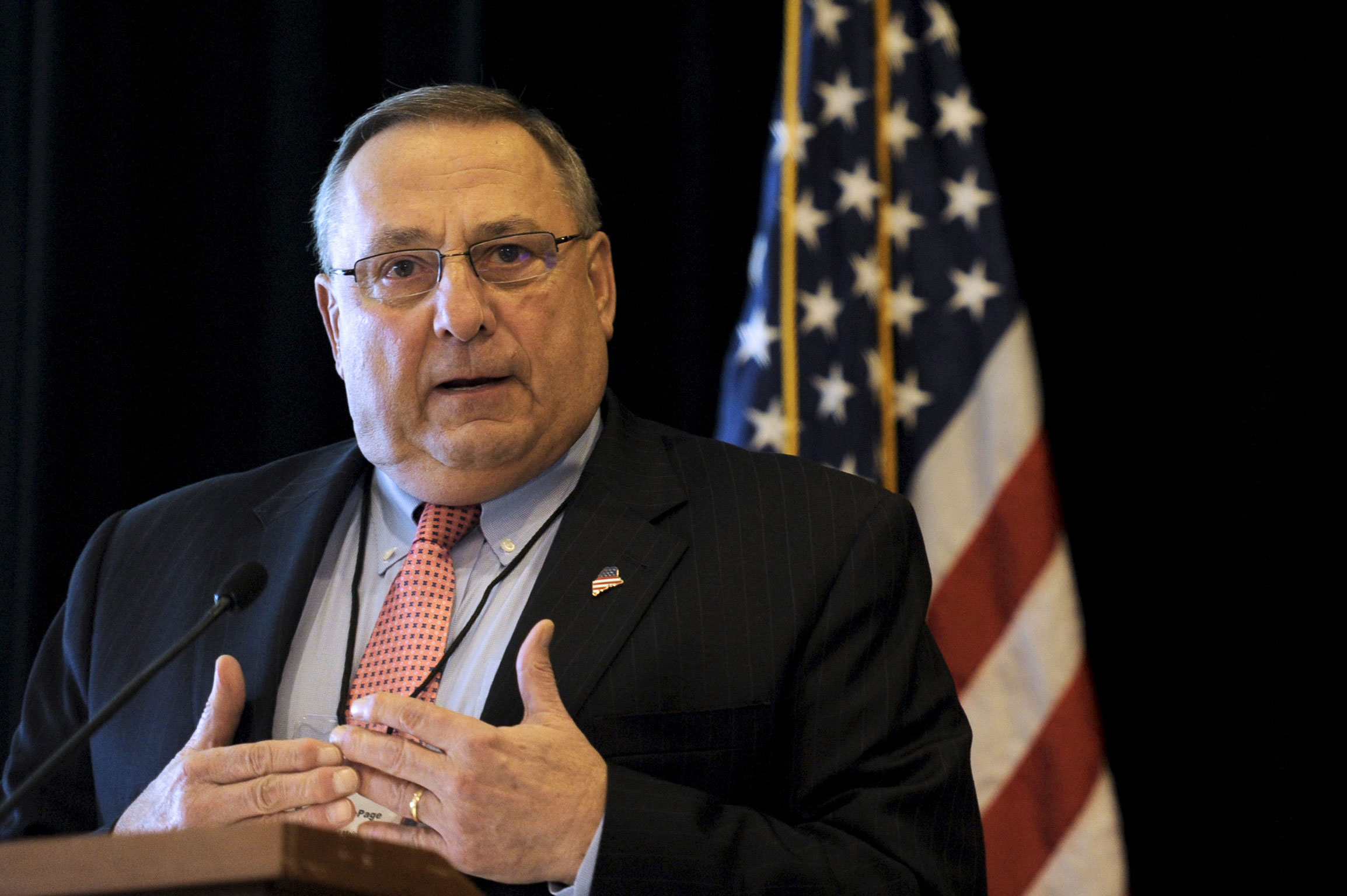
With Medicaid’s fiscal crisis now behind us, and with Gov. Paul LePage’s leadership, Maine has reduced taxes, stimulated job growth, and is experiencing one of the lowest unemployment rates in nearly 10 years at 3.8 percent.
The federal government must now take a similar approach in repealing Obamacare.
We must reduce the size of this massive government entitlement program, lower the tax burden on our states to promote job growth, and re-establish Medicaid’s core mission of supporting our elderly, disabled, and extremely low-income families.
Specifically, here are four actions Congress should take to reform federal Medicaid:
  1. Repeal the Medicaid expansion.
  2. Enact an immediate freeze on new enrollment.
  3. Roll back higher the Federal Medicaid Assistance Percentage by 2019.
  4. Mandate work requirements for able-bodied adults, similar to the Supplemental Nutrition Assistance Program.
The current House proposal that delays the repeal of the Medicaid expansion will absolutely trigger a push to expand Medicaid in nonexpansion states—Maine included—by the same advocacy groups that have been trying for the last several years.
Such an effort will bankrupt our state and send us backward from the economic stability we have achieved today.
We cannot afford to go back. We have reined in the out-of-control Medicaid spending that failed to prioritize our neediest citizens, exacerbated Maine’s tax burden, and overshadowed other state priorities.
There is still more for us to do, but we’ve been headed in the right direction and cannot afford this shift in course.
We must remember that federal tax dollars are never free, and the insatiable appetite of some states for more federal funding should never be confused with economic development. Fiscal responsibility is imperative.
Maine’s success should be a lesson to other states currently caught in the grips of uncontrollable growth and spending. It also shows what is possible at the federal level as Washington now looks to correct the fiscal mess that Obamacare left behind.

Commentary by Maine Commissioner of Health and Human Services Mary Mayhew. Originally published at The Daily Signal.

Trump's Voters Have Been Betrayed on Healthcare, Bigly


It’s now clear where this “repeal and replace” thing is headed. A small cadre of the GOP House leadership hammered out a few tweaks of Obamacare in secret. All the essentials of Obamacare were left in place: the mandates, the regulations, the strictures, the entitlement expansions, the preset packages, and many taxes.
The glorious reform had "lame" written all over it. A mandate with penalties paid to government is replaced with a mandate to pay insurance companies plus a refundable tax credit which might actually cost more in the future than the present system.

You might say, as Reason observed, that it is “better than nothing.” True, and Khrushchev’s economic ideas were an improvement on Stalin’s. Still, it’s another central plan, providing no real substantial room for new innovation, competition, or genuine market forces.

When the bill was released on March 7, Trump tweeted: “Our wonderful new Healthcare Bill is now out for review and negotiation.”

This tweet shattered the illusion that something dramatically pro-freedom would actually happen. Despite GOP control of the House, Senate, Executive Branch, and even a free-market minded head of the Health and Human Services, the proposed reform is something that these very same people would have decried as socialism eight years ago.

Revolt Against the Regime

A few smart, principled people in the party quickly objected, with Rand Paul in the Senate and Justin Amash in the House leading the charge. They know that this is a once-in-a-lifetime opportunity to fix a healthcare system that has been getting structurally less functional for many decades, burdened down ever more with a thicket of control, subsidies, pressure-group payouts, and bureaucratic layers of rules.

They were there as Obamacare became the final disgrace of the welfare state, so bad that the former president himself didn’t even mention it, much less brag about it, in his farewell address. The election was an opportunity, finally.

During the election’s final weeks, Trump opposed everything about Obamacare and brought out his rhetorical blowtorch against it in the final weeks, just as premiums rose astronomically. Clinton, in contrast, promised only tweaks to make the existing system work better.

Voters revolted, hoping for some relief. Exit polls from the 2016 presidential election told the story. Trump had temporarily dropped even his obsessions with nationalism, protectionism, and strongman symbolism for just a few days to say something sensible: repeal and replace this monstrosity. The outrage against the prevailing system launched him into the presidency.

Now it is mid-March and the great moment has arrived. As it turns out, nearly everything is left just as it was. It’s not as if Trump is doing his best to support the best-possible option. There are plenty of good plans out there. He has just rejected them in favor of the most watered-down reform possible.

Indeed, he has used the full weight of the presidency, all the power of his influence, and every bit of political clout he has to support the worst-available plan for dealing with the utter and complete failure of the status quo. He went so far as to invite his free-market critics to the White House and the Oval office, gave them a chance to speak, and then finally laid out his conditions for negotiations: stop criticizing the thing he supports as merely Obamacare-Lite.

Sensing that he had a problem, Trump then tweeted that this was only the first stage of three, and the good stuff will come later.

Now the Congressional critics have a problem. The more they criticize the proposed reform, the less influence they will have over the process going forward. Or they can take a gamble that Trump might ultimately improve the bill under their influence, but they have to muzzle their criticisms themselves in order to be in the game at all.
And here we have the “art of the deal” in action. It is about getting something, anything, shoved through, with the right people given what they need to take credit or cast blame, depending on their appointed role in the political drama. The deal is what matters, not the actual results. I’m the last person to be a pessimist, but it looks to me like the end result will be: the codification of Obamacare in principle and practice.

It could have been otherwise, and so easily. Just imagine the power of the Trump presidency, in its earliest weeks, pushing for a real free-market solution. It might have worked. At least it would have defined the right terms: freedom vs. control. Now that theme is lost and so is the chance for real reform.

Why Am I Shocked?

On a personal note, the course of events has hit me like a sucker punch. My friends keep telling me that I was ridiculous to expect anything else. “Did you really expect something good to come of this presidency? That’s so naive. You, more than anyone, predicted that there would be no net increases in liberty from this.”

The truth is that my brain can’t work without having some hope. There had to be some good that would come from the election outcome, and surely doing something about the healthcare problem is it.

After all, even the worst US presidents have often done at least one good thing. Clinton reformed welfare. Reagan cut tax rates. Carter deregulated. Nixon opened diplomatic relations with China. Even FDR deserves kudos: his first act as president was to repeal liquor prohibition.

So, I had it worked out in my mind that the full repeal of Obamacare and its replacement by a market-based system would be the one great thing that would happen in the Trump years. We might still get trade wars, a dangerous military build up, police-state controls on association, and travel restrictions, but at least something as important as healthcare would be brought into the 21st century.

Up with Freedom

The root problem is that the health care system is not free from government control. It’s why the far-less-regulated sectors of veterinary medicine and cosmetic surgery are just fine, with declining prices, better technology, and more access. There is nothing special about medicine relative to the economic forces that manage every other good and service.
Meanwhile, my Google Home robot can bring any product to me with a voice. I can summon a burrito to my desk with a click on my watch. I can get a personal trainer to show up to my place on schedule. Everyone is competing to bring me cool stuff, often for free. With markets, everything works for you and me. Healthcare is not only failing to improve but getting more expensive, less accessible, more stuck in a bureaucratic mire.

Rand Paul offers one salient example: how about new models for price negotiation with large insurers? If regulations allowed it, people could join co-ops of any size that would work like insurance mutual funds, and managers could shop around for the best policies at the best prices. This is only one example but in order to see it, we need massive deregulation.

It is not entirely crazy that a passionate Rand Paul and his colleagues will finally prevail and get a better bill. Their commitment is obvious, and it is not just about political posturing. There are millions of human lives at stake. We are, after all, talking about health, which is at the core of the quality of life itself. Only freedom can be trusted to manage it. 

However, keep this in mind: should something good finally emerge, whether this year or next, it will be due not to the “greatness” of the executive and all his bluster, but rather to the courage, character, and commitment of a handful of people who still believe that freedom is that best path. It is not the political system that will have worked; it is that moral passion triumphed over politics.

And here we have the best possible precondition for liberating the medical sector from government: a deep and broad cultural commitment to human freedom in every area of life. (See ten principles for real healthcare reform.) Politics is not the agent of change but rather the thing that is changed. There is always hope, rarely in the political process but always in the human heart and mind.

Jeffrey A. Tucker
Jeffrey A. Tucker
Jeffrey Tucker is Director of Content for the Foundation for Economic Education. He is also Chief Liberty Officer and founder of Liberty.me, Distinguished Honorary Member of Mises Brazil, research fellow at the Acton Institute, policy adviser of the Heartland Institute, founder of the CryptoCurrency Conference, member of the editorial board of the Molinari Review, an advisor to the blockchain application builder Factom, and author of five books. He has written 150 introductions to books and many thousands of articles appearing in the scholarly and popular press.
This article was originally published on FEE.org. Read the original article.

Socialism Requires a Dictator

The idea of communism – the common sharing of productive property and its resulting output – is as old as the ancient Greeks and Plato’s conception of the ideal Republic in which the guardians all live and work in common under the presumption that a radical change in the social institutional setting will transform men from self-interested beings into altruistic servers to some defined needs of society as a whole.

This highlights a fundamental difference in the conception of man in the classical liberal versus socialist worldviews. Does man have a basic and invariant human nature that may be multi-sided and complex, but no less fixed in certain qualities and characteristics? Or is human nature a malleable substance that can be remolded like clay in the sculptor’s hands by placing human beings into radically different social arrangements and settings?

Classical liberals have argued for the former, that human beings are basically what they are: fairly reasonable, self-interested beings, guided by goals of personal improvement and betterment as the individual comes to define those for himself. The social dilemma for a humane, just, and widely prosperous society is how to foster a political and economic institutional order to harness that invariant quality in human nature so that it advances human betterment in general rather than becoming a tool of plunder.  The classical liberal answer is basically Adam Smith’s system of natural liberty with its open, competitive, free market order.

Members of what was emerging as the socialist movement in the late eighteenth century and into the nineteenth century argued the opposite. They insisted that if men were selfish, greedy, uncaring and insensitive to the circumstances of their fellow men it was due to the institution of private property and its related market-based system of human association. Change the institutional order in which human beings live and work and you will create a “new man.”

Indeed, they raised to the ultimate human societal ideal, a world in which the individual would live and work for the collective, the society as a whole, rather than only for his own bettered circumstances, presumably at the expense of others in society. Socialism heralded the ethics of altruism.

The interested student can read through a huge range of socialist literature by a host of advocates of collectivism. Some longed for a more agrarian and rural paradise; others envisaged an industrial future for mankind in which productivity will have reached the point at which machines did virtually all the work. Humanity would be set free, to use a version of one of Karl Marx’s imageries, to hunt in the morning, fish in the afternoon and sit around the fireplace discussing socialist philosophy with one’s comrades who had all been liberated from work and worry by the arrival of the communist post-scarcity heaven-on-earth. (See my article, “Marx’s Flight from Reality.”)

Changing Human Nature Needs a “Dictatorship of the Proletariat”

But the core conception of the coming paradise-on-earth is that man’s nature could and should be made to change. There are few places in Karl Marx’s writings in which he actually speaks of the institutions and workings of the socialist society that will come after the downfall of capitalism. One is in his 1875 work, Critique of the Gotha Program, the policy agenda of a rival socialist group that Marx strongly disagreed with.

The dilemma, Marx explains, is that even after the overthrow of the capitalist system, residues of the previous system would permeate the new socialist society. First, there would be the human remnants of the now discarded capitalist system. Among them would be those who want to restore the system of worker exploitation for their own ill-gotten profit gains. Equally a problem would be the fact that the “working class,” although freed from the “false consciousness” that the capitalist system under which they had been exploited was just, would still bear the mark of the capitalist psychology of self-interest and personal gain.

Thus, there had to be in place and in power a “revolutionary vanguard” of dedicated and clear seeing socialists who would lead “the masses” into the bright, beautiful future of communism. The institutional means of doing this, said Marx, is the “dictatorship of the proletariat.”

In other words, until the masses, the workers, are freed from the individualist and capitalist mindset that they had been born into and mentally made to act within, they needed to be “reeducated” by a self-appointed political elite that has liberated their minds, already, from the capitalist false consciousness of the past. In the name of the new socialist-era freedom-to-come, there must the reign of a dictatorship made up of those who know how humanity should think, act, and associate in preparation for the full communism awaiting mankind.

At the same time, the dictatorship is necessary to suppress not only any attempts by the former capitalist exploiters to restore their power over the, now, socialized property they used to own. These voices from the capitalist past also must be prevented from speaking their self-serving lies and deceptions about why individual, self-interested liberty is morally right, or that private property serves the betterment of all in society including workers, or that freedom means those “bourgeois” liberties of freedom of the press, or speech or religion or democratic voting. The masses must be brought to, and indoctrinated in, the “true” consciousness that freedom means the collective ownership and direction of the means of production and the selfless serving of society that the socialist revolutionary vanguard in charge knows to be true.

This also explains why the socialist phase of the “dictatorship of the proletariat” could never end in any of the Marxist-inspired revolutionary regimes over the last one hundred years. Human nature is not waiting to be remolded like wax into a new human form and content. Human beings seem generally not be hardwired to be altruistic, selfless eunuchs. Thus, self-interest always rises to the surface in people’s conduct, and if it is to be ethically denied, there must be political force to keep repressing it and trying to constantly extinguish it.

In addition, as long as there were capitalist enemies anywhere in the world, the dictatorship of the proletariat had to be preserved in the socialist countries to assure that the reeducated minds of the workers already lucky enough to live under socialism were not re-infected by capitalist ideas coming in from outside the people’s collectivist paradise. Hence, the “iron curtain” of censorship and thought control in the Marxist parts of the world, in the name of the people over whom the revolutionary vanguard ruled.

Socialist Economic Planning Equals Commanding People

Also, once private enterprise was abolished through the socialization of the means of production and brought under the control and direction of the socialist government, a central economic plan was now essential. If not the profit-motived individual entrepreneurs in directing the private enterprises under their ownership to satisfy consumer demands guided by the competitive price system, then someone must determine what gets produced, where, when and for which purpose and use.

The direction of “the people’s” collectivized means of production requires a centralized plan concerned with designing, implementing and imposing it on everyone for the good of the society as a whole. This means not only lumber and steel must be assigned a use in a particular place in the socialist society, but so must people. Hence, in the communist economies of the twentieth century the state’s central planning agencies determined who would be educated for what skills or expertise, where they would be employed and the work they would do.

Since the state educated you, assigned you work and served as your only employer in that job, the state also determined where you would live; not only in what city, town or village, but what apartment in which government-owned residential building would be made your abode. Recreational facilities, places for rest and vacations, the types of consumer goods to be produced and distributed where and for whom: these, too, were all centrally determined by the socialist planning agencies following the orders of the dictatorship of the proletariat.

Not one corner of everyday life – its form, content, quality, or characteristics – was free from the control and determination of the all powerful and all-encompassing socialist state. Its design and attempted implementation was truly “totalitarian.” It may have been Benito Mussolini, the father of fascism, who coined the term, “totalitarianism” as meaning “everything in the State, nothing against the State, nothing outside the State.” But nowhere over the last century was this more insistently, pervasively, and coercively imposed than in the communist countries molded on the model of the Soviet Union as created by Vladimir Lenin and horrifyingly institutionalized by Josef Stalin and their successors.

Based on a presentation delivered as the John W. Pope Lecture sponsored by the Clemson Institute for the Study of Capitalism at Clemson University on March 1, 2017.
Richard M. Ebeling
Richard M. Ebeling
Richard M. Ebeling is BB&T Distinguished Professor of Ethics and Free Enterprise Leadership at The Citadel in Charleston, South Carolina. He was president of the Foundation for Economic Education (FEE) from 2003 to 2008.
This article was originally published on FEE.org. Read the original article.

Trillions in Debt and We're Just Scratching the Surface


As the federal debt has gone from astounding to unbelievable to incomprehensible, a new problem has emerged: The US government is actually running out of places to borrow.

How Many Zeros Are in a Trillion?

The $20 trillion debt is already twice the annual revenues collected by all the world’s governments combined. Counting unfunded liabilities, which include promised Social Security, Medicare, and government pension payments that Washington will not have the money to pay, the federal government actually owes somewhere between $100 trillion and $200 trillion. The numbers are so ridiculously large that even the uncertainty in the figures exceeds the annual economic output of the entire planet.

Since 2000, the federal debt has grown at an average annual rate of 8.2%, doubling from $10 trillion to $20 trillion in the past eight years alone. Who loaned the government this money? Four groups: foreigners, Americans, the Federal Reserve, and government trust funds. But over the past decade, three of these groups have cut back significantly on their lending.

Foreign investors have slowed the growth in their lending from over 20% per year in the early 2000s to less than 3% per year today. Excluding the Great Recession years, American investors have been cutting back on how much they lend the federal government by an average of 2% each year.

Social Security, though, presents an even bigger problem. The federal government borrowed all the Social Security surpluses of the past 80 years. But starting this year, and continuing either forever or until Congress overhauls the program (which may be the same thing), Social Security will only generate deficits. Not only is the government no longer able to borrow from Social Security, it will have to start paying back what it owes - assuming the government plans on making good on its obligations.

With federal borrowing growing at more than 6% per year, with foreign and American investors becoming more reluctant to lend, and with the Social Security trust fund drying up, the Fed is the only game left in town. Since 2001, the Fed has increased its lending to the federal government by over 11% each year, on average. Expect that trend to continue.

Inflation to Make You Cry

For decades, often in word but always in deed, politicians have told voters that government debt didn’t matter. We, and many economists, disagree. Yet even if the politicians were right, the absence of available creditors would be an insurmountable problem—were it not for the Federal Reserve. But when the Federal Reserve acts as the lender of last resort, unpleasant realities follow. Because, as everyone should be keenly aware, the Fed simply prints the money it loans.

A Fed loan devalues every dollar already in circulation, from those in people’s savings accounts to those in their pockets. The result is inflation, which is, in essence, a tax on frugal savers to fund a spendthrift government.

Since the end of World War II, inflation in the US has averaged less than 4% per year. When the Fed starts printing money in earnest because the government can’t obtain loans elsewhere, inflation will rise dramatically. How far is difficult to say, but we have some recent examples of countries that tried to finance runaway government spending by printing money.

From 1975 to 1990, the Greek people suffered 15% annual inflation as their government printed money to finance stimulus spending. Following the breakup of the Soviet Union in the 1990s, Russia printed money to keep its government running. The result was five years over which inflation averaged 750%. Today, Venezuela’s government prints money to pay its bills, causing 200% inflation which the International Monetary Fund expects to skyrocket to 1,600% this year.

For nearly a century, politicians have treated deficit spending as a magic wand. In a recession? We need jobs, so government must spend more money! In an expansion? There’s more tax revenue, so government can spend more money! Always and everywhere, politicians argued only about how much to increase spending, never whether to increase spending. A century of this has left us with a debt so large that it dwarfs the annual economic output of the planet. And now we are coming to the point at which there will be no one left from whom to borrow. When creditors finally disappear completely, all that will remain is a reckoning.

This article first appeared in InsideSources.
Antony Davies
Antony Davies
Antony Davies is an associate professor of economics at Duquesne University in Pittsburg.
He is a member of the FEE Faculty Network.
This article was originally published on FEE.org. Read the original article.

5 Reasons the GOP’s Obamacare Plan Isn’t Real Repeal


Republicans have promised time and again to repeal Obamacare—not fix it, not try to make it better—they promised to repeal it.

Here are five reasons the American Health Care Act put forward by GOP leadership does not fulfill that promise.

1) The bill does not fully repeal Obamacare. If you have a faulty foundation, nothing you build on top of it is stable or sustainable. Tweaking a little here and there is not going to get the job done. Obamacare should be completely repealed before any replacement or reforms are introduced.

Republicans already have the model for this in their 2015 repeal bill. Every single GOP senator voted for that legislation. There was just one problem at the time: Barack Obama was president. Now, under a President Donald Trump, there’s no impediment to finishing the job.

2) There is no real expectation that this bill will lower costs and make it more affordable for all Americans. It fails to correct the features of Obamacare, namely insurance regulations, that drove up health insurance costs and premiums in the first place.

And that means that the 25 million Americans who get their insurance on the private market or through small-employer plans will see little to no relief. Obama promised that you would be able to keep you doctor. Seven years later, we know that’s not true. Republicans said they would fix this by repealing Obamacare. Now, the very people who have suffered under Obamacare are at risk again of being on the losing end of the deal—again.

3) The bill does not repeal Medicaid expansion. In fact, it encourages states to sign up even more people over the next three years. The costs of this policy are not sustainable without driving states and taxpayers further into debt. But equally wrong is that this bill does not address the problem of states increasingly steering Medicaid dollars originally intended for the truly needy and disabled to able-bodied adults.

4) The tax treatment of health care should be at the center of true reform, but this bill fails to tackle that issue head on or to ask and answer the hard questions.

Should tax credits be used to finance the purchase of health insurance on the individual market?

If so, who gets these tax credits and who will pay for them?

That’s a debate we can have after Obamacare is fully repealed and we are starting from square one. But we are not starting from square one and the current bill runs the risk of expanding our already massive health care entitlement programs.

5) Unlike previous attempts to repeal Obamacare, there is serious concern that the current bill does not adequately prevent the use of taxpayer dollars from being used to pay for abortions. Obamacare is a faulty foundation and Congress should not attempt to build anything on top of it.

For the past four elections—2010, 2012, 2014, and 2016—voters sent a message and consistently elected Republicans to Congress because they promised to repeal and replace Obamacare.
Unfortunately, it appears this Congress is trying to treat the symptoms of a failing program as opposed to going after the cause of the disease.
The time for full repeal is here. No more excuses.
Commentary by Genevieve Wood. Originally published at The Daily Signal.

House Panel Votes to Preserve, Expand DC School Vouchers


A House committee voted Friday to continue a school voucher program for poor children in the District of Columbia, signaling Republicans’ intent to follow through on President Donald Trump’s promise to expand school choice throughout the country.

The program, known as the D.C. Opportunity Scholarship Program, provides federally funded scholarships to low-income families in the nation’s capital. The scholarships enable them to take their children out of a failing public school and send them to a private school of their choice.

The scholarship program currently serves more than 1,200 students each year, but would be able to expand under the legislation before Congress.

“Public schools in D.C. have struggled for decades, with some of the worst academic outcomes in the nation,” Lindsey Burke, an education policy expert at The Heritage Foundation, said. “While there have been some improvements recently, kids in the scholarship program have gotten an immediate exit pass to better options that fit their unique learning needs.”

“This is a great first step to securing a program that had been under constant threat of defunding under the Obama administration. The D.C. Opportunity Scholarship Program has been a lifeline for poor children living in the nation’s capital,” Burke said.

The House Oversight and Government Reform Committee, in a voice vote Friday morning, advanced the bill to the full House, despite continuing opposition from many Democrats.

Three attempts to amend the bill by committee Democrats failed by votes along party lines.

During the Obama administration, the D.C. Opportunity Scholarship Program faced an uncertain future because it was opposed by teachers’ unions, which pressured Democrats. On multiple occasions, the administration attempted to defund it.


Among those against the program’s renewal are the National Education Association, the largest teachers’ union in the country, and a majority of the D.C. Council. Mayor Muriel Bowser, a Democrat, supports the voucher program, however.
Eight of the 13 D.C. Council members sent a letter Tuesday to Rep. Jason Chaffetz, R-Utah, chairman of the oversight committee, expressing “staunch opposition” to any expansion of the scholarship program, and asking Congress to phase it out completely.
“The voucher program should be phased out because participation in the program and similar initiatives has not only failed to improve students’ academic performance, but worsened it, as found in a series of recent studies,” the city lawmakers wrote.
A 2010 evaluation by the U.S. Department of Education found “no conclusive evidence” that the D.C. school voucher program affected student achievement. However, that same report found that the program “significantly improved students’ chances of graduating from high school.”
According to that evaluation, 91 percent of students participating in the program graduated high school, versus 70 percent of students in the control group, which represented parents of children who applied for a scholarship but weren’t awarded one.
Many low-income students served by the program live in Anacostia, a neighborhood of Southeast Washington where 64 percent of children are raised in poverty. Last year, the local high school graduated only 42 percent of its students.
In December, The Daily Signal interviewed Anacostia resident Shakira Butler, a single mother whose daughter Kariah, 10, is a scholarship recipient. Because of the voucher program, Butler said, she is able to afford tuition at St. Francis Xavier Academy, a Catholic school in the area.
“For those who are naysayers of the program,” Butler said, “put yourself in our shoes.”
Despite the latest objection from the D.C. Council, made up of Democrats except for two independents, Bowser reaffirmed her support for the program Tuesday, The Washington Post reported.
“It’s a delicate balance in the District that I think is a model for choice across the nation,” the mayor said.
The D.C. Opportunity Scholarship Program achieved increased graduation rates among scholarship recipients by spending less than half what is spent annually per child in the D.C. public school system—$12,600 compared to $29,400.
The program is the nation’s only federally funded school voucher initiative. State programs exist in Florida, Indiana, Louisiana, and Ohio.
According to the American Federation for Children, nearly 6,600 children from low-income families have been awarded scholarships since the D.C. Opportunity Scholarship Program began 12 years ago, and more than 19,800 have applied.
In addition to providing scholarships for low-income students, the program’s reauthorization includes additional funding for D.C. public and charter schools.
Report by The Daily Signal's Kelsey Harkness. Originally published at The Daily Signal.