It’s Time to Restore Free Speech to American Churches

For more than 60 years, the federal government has been sticking its nose where it doesn’t belong, threatening to punish houses of worship and their leaders for what they say.

The Free Speech Fairness Act was introduced in Congress earlier this week and, if enacted, would go a long way toward ending that.

Ever since 1954, when Congress enacted the Johnson Amendment, the IRS has been telling churches that it has the power to monitor their speech.

Under that law, if pastors or other clergy say anything that (in the government’s opinion) is “on behalf of (or in opposition to) any candidate for public office,” the feds can begin taxing them and potentially bring about their financial ruin.

The history behind that speech-censoring law is not what you might expect.

Most people might assume that it was part of secularists’ relentless efforts to “separate church and state.” But the story that history tells is quite different.

In the 1950s, then-Sen. Lyndon B. Johnson, D-Texas, faced stiff criticism from nonreligious nonprofit organizations. In order to silence their attacks against his future campaigns, he introduced a bill to ban all nonprofit groups from speaking for or against political candidates.

Interestingly enough, churches weren’t even the target of his proposal.

But regardless of Johnson’s intent, houses of worship nevertheless find themselves squarely within that law’s reach. And for well over half a century, they’ve had to continually wonder when their speech on some of the most pressing political issues of the day might trigger IRS scrutiny.

This tramples on the rightful role of churches.

Pastors, priests, and other clergy are called to instruct their congregants in all areas of life. The holy texts of the Abrahamic faiths have implications for everything in life, including politics and how to vote.

As Christian theologian and former Prime Minister of the Netherlands Abraham Kuyper wrote, “There is not a square inch in the whole domain of our human existence over which Christ, who is Sovereign over all, does not cry, ‘Mine!’”

The Johnson Amendment, however, carves out portions of this domain and labels them off-limits for churches unwilling to incur steep financial penalties.

The Johnson Amendment’s scope is sometimes misunderstood. It doesn’t just prohibit clergy from telling congregants who to vote for; it reaches beyond that, threatening to punish all houses of worship for saying anything that the IRS might deem to be in favor of, or in opposition to, a political candidate.

That vague guidance makes it impossible for religious leaders to know what crosses the line and what doesn’t.

Consider these scenarios: What if a pastor states in a sermon that a politician is unfit because his or her personal morality is not in line with the Bible’s teachings? Or what if a rabbi remarks that a politician’s immigration proposals do or do not honor the lessons of his faith’s sacred texts?

It’s not clear whether one, neither, or both of these examples cross the line.

But this we do know—churches and other houses of worship shouldn’t have to worry about this.

They should be free to speak on personal morality, immigration policies, and countless other issues as they relate to anything, including political candidates, and they should be free to do so without fear of government punishment.

The Free Speech Fairness Act would put an end to religious leaders’ playing this guessing game.

It would tell the federal government to stop scrutinizing what churches say about political candidates, and it would lift the muzzles that now cover America’s pulpits on the many issues that often cross into the realm of politics.

The often misunderstood idea of “separation of church and state” is a common objection to bills like the Free Speech Fairness Act. But those sorts of arguments have it exactly backwards: The Free Speech Fairness Act would actually restore (rather than undermine) a proper division between the government and the church.

Currently, bureaucrats are empowered to monitor pastors’ sermons. What could be a greater governmental intrusion into a church’s operations than that?

By removing a primary basis upon which the IRS inspects what clergy say, the Free Speech Fairness Act would put the government back in its proper place.

Over six decades ago, Texas politician Lyndon Johnson set off a chain of events that invited federal officials to meddle where they didn’t belong. The Free Speech Fairness Act says it’s high time we sent them packing.

Commentary by the Alliance Defending Freedom's Jim Campbell.  Originally published at The Daily Signal.

Why People Are Leaving Blue States in Droves

Some Americans think state boundaries and the principle of federalism are outdated relics from the past. They couldn’t be further from the truth.

New data in a report from the American Legislative Exchange Council (ALEC) paint a clear picture: States with the best policies are being rewarded with an influx of residents, and states with unattractive policies are losing residents.

Take two of the most high-tax, high-spend states in the union: New York and Illinois.

Over the last decade, New York has suffered a net loss of nearly 1.5 million residents and over 650,000 Illinoisans have moved elsewhere. Meanwhile, Texas, a right-to-work state with no income or estate tax, saw its population grow by 1.3 million.

Despite their appealing metropolitan hubs, New York and Illinois are shedding denizens.

States that scored high on the ALEC-Laffer State Economic Competitiveness Index, which takes into consideration 15 variables from the number of public employees to sales tax rates, have seen an influx of job-creating companies and taxpaying citizens over the last decade, while low-scoring blue states have been losing both.
While tax rates and labor laws are not the only factors that contribute to a state’s flourishing, the correlation between sound economic policy and private sector growth is clear.


The formula is simple. Good policy contributes to vibrant economies, and vibrant economies attract people eager for opportunity.

‘Laboratories of Democracy’

Federalism is about creating competition between the states by allowing them to craft their own respective policies, and then seeing what policies work best. This system has even more to commend it today than at the time of the founding.

Contrary to the expectations of progressive social scientists and pundits, government spending stimulates the government, but little else. A high minimum wage ultimately hurts those it is meant to serve. Progressive tax rates do not close chasmal blue state budget gaps.

Federalism is not just a boon to citizens—it is an advantage to state policymakers as well.

The states are often thought of as “laboratories of democracy.” That expression was initially coined by Justice Louis Brandeis, who ironically did not subscribe to the competitive view of federalism.

The idea is that when states implement policies, they provide test cases from which other states can learn. When a policy pays off, other states typically follow suit; when a policy is cursed by unintended consequences, other states can avoid the same pitfalls.

Many progressives claim that allowing states wide discretion to establish their own fiscal policies and regulatory regimes will result in a “race to the bottom” in which states attempt to drive out their poor and needy by decreasing welfare payments and lure in corporations by eliminating important regulations.

Political scientists have shown, however, that when it comes to welfare programs, public health regulations, and environmental protections, competition is what drives innovative and efficient solutions.

In other words, for progressives who are willing to pay the high price tag for expensive public services, there are still plenty of states willing to oblige.

Another critique of studies like the ALEC-Laffer Index is they heap too much praise on red states that implement conservative fiscal policies when, in fact, their citizens are shielded from the real downsides of fiscal conservatism—namely, limited spending on social programs.

Federal welfare policies allow frugal state governments to get credit for lowering taxes without taking the blame for cutting popular social safety net programs.

Essentially, critics argue, progressive federal policies end up subsidizing conservative state policies. As a result, states that score high on the ALEC-Laffer Index end up looking more appealing to more people.

On its face, this critique has some merit. Many of the states that score the highest on the ALEC-Laffer Index also tend to be states that get more money back from the federal government—mostly in the form of welfare payments—than they pay in taxes.

North Dakota, ranked No. 3 on the ALEC-Laffer Index, gets back $1.68 for every dollar paid in taxes. Tennessee and Oklahoma, also in the ALEC-Laffer top 10, get more back from the federal coffers than they put in as well.

Meanwhile, California, only four spots from the bottom on the ALEC-Laffer Index, gets only 78 cents back for every dollar sent to Washington. New York, dead last on the index, retrieves only 79 cents.

But federal policy also insulates residents of blue states from the full consequences of progressive fiscal policies.
Under current law, individuals can deduct their state taxes from their overall income for the purposes of determining what they owe the federal government in taxes. Thus, state politicians can hike up their tax rates without changing the effective tax rate their citizens pay.


While federal spending may make low-tax red states more appealing to residents and potential residents, the state tax deduction does the same for blue states.

Still, the broader thrust of this progressive critique is correct. Federal policy does alleviate some of the downsides that come along with both conservative and progressive fiscal policy.

A More Perfect Federalism

For the states to function as true laboratories of democracy, they should bear even more of the costs—and reap more of the rewards—of their policies.

The federal government should put more of the onus of funding and managing social welfare programs on the states and also consider eliminating the state and local tax deduction. This way, the real costs and benefits of state policies will be clear to citizens who can vote—or move—accordingly.

Were this done, the appeal of economically responsible red states would likely be even higher than ALEC’s study demonstrates it already is.

Lessons learned from state experimentation are of critical importance today.

As ALEC’s recent report shows, every one of the 50 states is wrestling with the mounting expense of unfunded liabilities caused by generous pensions and social welfare programs. Some states, like Arizona, are addressing the problem early and aggressively and others are taking note.

As state governments roll out various packages of cuts and revenue-raising measures to push themselves back into the black, they will provide test cases not just for one another, but for our radically insolvent federal government as well.

Commentary by John York.  Originally published at The Daily Signal.

How to Navigate a Financial Emergency

 
(Family Features) Your washing machine suddenly breaks down, a child requires a laptop for school or your car needs new tires. Sometimes surprise bills can be difficult to cover.

Life’s financial emergencies happen to everyone, but 6 in 10 Americans cannot cover an unexpected $500 bill without selling something or borrowing money, according to Bankrate.


As many as 70 percent of U.S. families live paycheck to paycheck, according to Alok Deshpande, founder of SmartPath Financial Education. In fact, less than 30 percent of families today have anything left at the end of the month to put in savings. That reality is echoed by a recent GoBankingRates survey, which revealed that 69 percent of Americans have less than $1,000 in savings and 34 percent don’t have any savings at all.

“When you don’t have cash for something you need, there are many different financing options available. However, few realize that many of these options can lead to a debt spiral that can be difficult to pull out of,” said Richard Carrano, CEO of Purchasing Power, an employee purchase program offering consumer products and services through payroll deduction at the workplace.

“Regrettably, circumstances and bank accounts don’t always align. That’s why it’s so important to be ‘credit educated’ – to understand hidden costs and fees associated with high-risk credit options and avoid making financial mistakes that can hound you months, even years later.”

Buying items on sub-prime credit or through high-interest vehicles like payday or title loans can be risky propositions, particularly if you have a low credit score to begin with. Understanding your options can help ensure you make the best choice to meet your short-term needs without compromising your long-term finances. Consider the following:

Cash:
Paying cash for a major purchase makes the most sense in terms of avoiding exorbitant fees and preventing credit dings from missed payments. However, cash may not always be readily available.

Credit cards:
Chances are, even with a shaky financial history, you can find a creditor willing to offer you a line of credit, but you’ll likely have a steep annual percentage rate that accrues each month. Furthermore, if you’re unable to repay more than the monthly minimum, you could end up carrying that debt for years before it’s fully paid down.

Employee purchase programs:
Research shows that financial stress at home regularly impacts employee productivity at work. This leads many employers to offer an employee purchase program such as Purchasing Power, which allows you to buy what you need through automatic paycheck deductions over a 12-month period. There’s no credit check, zero interest and no hidden fees. There’s also a free financial wellness platform to help with budgeting, credit reports and personal coaching. Learn more at PurchasingPower.com.

Rent to own:
With rent-to-own products, you pay a monthly principal amount plus service fees and taxes for a period of time, up to completing the rental agreement and owning the item outright. While the monthly rate makes items like appliances and furniture immediately accessible, be wary of the long-term cost. Renters can end up paying as much as three times the retail value of an item before satisfying the terms for ownership.

Payday/Title loans:
Essentially, these loans function as a loan against a future paycheck or your vehicle. They often come with high percentage rates and fees, as well as extremely short repayment schedules. Rely on these loans only if you are certain you can cover the entire loan and associated fees by the designated due date.

Whatever option you choose for emergency financing, understanding the repercussions can help you long-term.

Main image (couple budgeting) courtesy of Getty Images
SOURCE:
Purchasing Power

Changing the end of life care conversation

(BPT) - Hospice and palliative care services help people with illnesses no longer responding to curative treatment face death on their own terms, most often at home or in a familiar setting. No matter where a person chooses to receive these services, hospice staff can guide them and their families through difficult decisions surrounding end-of-life care.

Many families feel overwhelmed when told by a physician that a loved one has six months or less to live. A physician may use the terms “palliative care” or “hospice care,” which often raises questions about the details regarding these services.


Both hospice and palliative care are patient- and family-centered health care options that address physical, emotional and spiritual pain. Hospice is limited to terminally ill patients who meet Medicare’s eligibility requirements and focuses on enhancing comfort and quality of life during the final months of life — without curative intent. Palliative care is available regardless of the diagnosis and may or may not include curative options along with relief from the symptoms, pain and stress of a serious illness. Families of patients in hospice care gain access to caregiver education and training, help with difficult decisions, respite care, and bereavement services, among others.


There is no "One size fits all"

Hospice and palliative care can be delivered at home, in a nursing home, a dedicated hospice facility or an acute care hospital. These services have come a long way since the first U.S. hospice facility opened in Branford, Connecticut in 1974.


According to Joseph Shega, MD, senior vice president and national medical director for VITAS Healthcare, the nation’s leading provider of end-of-life care, “we started as pioneers in this area of health care about four decades ago and it has been gratifying to see how the practice of hospice and palliative care has truly transformed the way people think about and manage end-of-life experiences.” He explains that “it’s so important to preserve comfort, respect and dignity in the face of terminal illness.”


A growing number of Americans are choosing to access hospice services, which are covered by Medicare, Medicaid and most private insurance. In 2014, the National Hospice and Palliative Care Organization (NHPCO) reported nearly 2 million Americans received hospice care, and according to AARP, among those 50 to 64 years old, 71 percent want to "age in place," in their own homes. When people are in control of where and how they face the end-of-life, they can focus more time on experiencing meaningful moments with loved ones.


How to start "The conversation"

If you were unable to speak for yourself, do your loved ones know what kind of medical care you would want? Do you know what they would want?


Having a conversation about end-of-life care and advance directives may not be the easiest conversation you’ll ever have, but it is one of the most important.


Despite the topic’s importance, only 27 percent of Americans report having talked with their families about end-of-life care. The best way to make your medical wishes known is to create an advance directive and share it with your family and your doctor.


Have the conversation and don’t wait for a crisis. Failing to communicate healthcare choices can lead to anguish, family conflicts and unintended costs that can result when patients no longer can tell their loved ones what kind of care or which “heroic measures” they would accept or reject.


Talk to your loved ones—briefly, in depth, frequently, lightly, seriously—about your wishes. We suggest using milestone events—wedding, anniversary, birthday, retirement, graduation, downsizing move, family holiday—to hold “what if” conversations with loved ones. Keep it light but heartfelt. You may be surprised: letting your loved ones know your wishes could start a frank conversation among the generations about terminal illness, funerals, religious beliefs and other end-of-life concerns.


If you or a loved one is ready to talk about end-of-life care options or would like to find out more about hospice care or how to start the conversation, VITAS can help. Visit www.vitas.com/hospicemonth or call 1-877-531-6798.

How Fewer Manufacturing Jobs Can Be Good for Workers and the Economy

Politico reports that Donald Trump may not have a Council of Economic Advisors, the White House’s in-house think tank. Upon hearing that, former Obama White House CEA chair Austin Goolsbee tweeted: “If you never want to hear-even privately-that your idea will cost X/have these effects/needs more thought, you should definitely ban the CEA.”

Which got me thinking: What sorts of things might a proper Trump CEA tell Trump? Maybe that superfast economic growth is very, very hard.  Maybe that we can’t grow out way out of the entitlement debt problem. Maybe that selling health insurance across state lines won’t revolutionize the insurance marketplace.

And maybe the CEA economists would show Trump these two charts:


The above charts are taken from a Martin Wolf column in the Financial Times, with this bit of explantion:
The main explanation for the long-term decline in the share of manufacturing employment in the US (and other high-income economies) has been the rise in employment elsewhere. In 1950, employment in manufacturing was 13m, while that in the rest of the economy was 30m. By the end of 2016, it was 12m and 133m, respectively. Thus, all the increase in employment between 1950 and the end of 2016 occurred outside manufacturing. Yet output of US manufacturing was not stagnant. Between 1950 and 2016, output rose 640 per cent, while employment fell 7 per cent. Even between 1990 and 2016 output rose 63 per cent, while employment fell 31 per cent. The explanation for the contrast between output and employment is rising productivity.

Republished from AEI.
James Pethokoukis
James Pethokoukis
James Pethokoukis is a columnist and blogger at the American Enterprise Institute. Previously, he was the Washington columnist for Reuters Breakingviews, the opinion and commentary wing of Thomson Reuters.
This article was originally published on FEE.org. Read the original article.

Shutting Out Immigrants Could Cost America Trillions

President Donald Trump’s immigration ideas may have already cost America trillions of dollars — with perhaps even more economic damage on the way.

Reputation to Protect


See, America has a reputation. And that reputation is worth something. Quite a lot actually. A nation with a good reputation — such as one of tolerance and trustworthiness — has enhanced influence to achieve desired economic and geopolitical outcomes without force or cutting checks. A decent rep also makes a country a more attractive destination for capital, both financial and human.

So how do you think Brand America is doing these days?

It was actually pretty strong before the 2016 election, at least as imperfectly measured by Anholt-GfK Nation Brands Index. America’s global ranking jumped from seventh to first when Barack Obama was elected and has remained at or near the top since.

The U.S. was first last year, too, but still saw a sizable drop in global perceptions. It’s hard to imagine that the Trump immigration and refugee travel ban — and the accompanying chaos — has done much to reverse that slide. If the Obama bump boosted the value of Brand America by some $2 trillion, how much has the Trump slump possibly hurt it?

But there’s an even bigger risk to U.S. prosperity: What if foreigners no longer see America as a welcoming place? Many potential immigrants to America just might take “no” for an answer and decide to go elsewhere or stay home. Already, Canadian immigration lawyers have reportedly been flooded with inquiries from U.S.-based engineers and computer scientists.

This should all be alarming for an economy that has benefited so much from attracting the world’s best and brightest. Roughly half of U.S.-based unicorns — technology startups worth at least $1 billion — were founded by immigrants, with India the top nation of origin.

Race for Talent

As venture capitalist Paul Graham tweets, “This is a good time to remember that without immigration the U.S. will only have 5 percent of the top people in each field.” And more to the point regarding the Trump ban, as The Atlantic notes, “Iranian-Americans founded or hold leadership positions at Twitter, Dropbox, Oracle, Expedia, eBay, and Tinder.”

The global race for talent is becoming ever more competitive, especially as Asian economies modernize and increase their demand for highly skilled labor. A 2014 University of Washington study, using LinkedIn data to monitor global worker migration, vividly shows how America is no longer the only game in town. While 27 percent of migrating professionals in its sample group chose the U.S. as a destination in 2000, just 13 percent did in 2012.

The biggest drop was among those in the science, technology, engineering, and math fields — to 15 percent from 37 percent. In addition, the study found the share of graduates from the top 500 universities worldwide coming to America had also fallen by half.

Of course, almost every consultant and think-tank plan for boosting U.S. innovation and economic growth at least partly depends on sharply boosting high-skill immigration. Like this one from the McKinsey Global Institute:
The nation could generate tremendous impact on productivity in the near term and beyond 2020 by increasing the annual flow of high-skilled immigrants. This can be done by increasing the number of skilled H-1B visa holders, giving preference to visas for extended relatives of permanent residents who have specialized skills or tertiary degrees, and streamlining the visa process for skilled workers and entrepreneurs. [McKinsey Global Institute]
Sounds great, right? But pretty much every advanced economy is trying to play the same game. And probably none of those countries currently have their technology industry — a magnet for super-smart immigrants — physically protesting and legally attacking their nation’s immigration policies. It’s hard to see how America gets from Trump’s immigration order to the expansive vision put forward by some of the most aggressive immigration advocates.

In his book The Upside of Inequality, former Bain Capital executive Edward Conard outlines a plan to supercharge U.S. growth by restricting immigration to top-scoring math and science majors from around the world, maybe 5 to 10 million immigrants. Team Trump can fiddle with immigration policy all it wants to attract potential superstar immigrants like Google’s Sergey Brin or Tesla’s Elon Musk. But the results may disappoint if America is now seen as deeply intolerant.

The Flip-side


Then again, perhaps Team Trump could care less. Senior Trump adviser Stephen Bannon has complained that American engineering schools are “are all full of people from South Asia and East Asia. . . . They’ve come in here to take these jobs.” He has also suggested it’s a problem when “two-thirds or three-quarters of the CEOs in Silicon Valley are from South Asia or from Asia.”

No worries, then. The Trump administration looks to be well on its way to finding a solution to Bannon’s concerns.

James Pethokoukis
James Pethokoukis
James Pethokoukis is a columnist and blogger at the American Enterprise Institute. Previously, he was the Washington columnist for Reuters Breakingviews, the opinion and commentary wing of Thomson Reuters.
This article was originally published on FEE.org. Read the original article.

Nuns Respond to Draft of Trump Religious Freedom Executive Order


After a draft of a religious freedom executive order from President Donald Trump was leaked to the media, a group of Catholic nuns have once again found themselves in the spotlight.

“I am aware of the draft executive order that seems to be circulating as of the last couple of days,” Sister Constance Veit, director of communications for the Little Sisters of the Poor in the U.S., told The Daily Signal on Friday. “It’s just a very hopeful sign that things could be coming to an end.”

The Little Sisters of the Poor are a group of nuns who care for the elderly poor. Under Obamacare, they argued the government refused to accommodate their pro-life religious beliefs by forcing them to be involved in the coverage of contraceptives and abortifacients.

Among other things, Trump’s draft executive order would instruct the secretaries of health and human services, labor, and treasury to grant relief to the Little Sisters of the Poor.

In the video above, Veit addresses some of the criticisms that involve the executive order, including allegations that it would enable discrimination.

Report by The Daily Signal's Kelsey Harkness. Originally reported at The Daily Signal.

Pro-Life Lawmakers: Planned Parenthood Shouldn’t Get Another ‘Dime of Taxpayer Dollars’

Live Action President Lila Rose is flanked by members of Congress as she addresses the media. (Photo: Caleb Ecarma)
Pro-life advocacy group Live Action, joined with members of Congress, called Feb. 2 for the ending of taxpayer funding of Planned Parenthood, the nation’s largest abortion provider.

“I hope that the sands of time blow over that Capitol dome before we ever give one more dime of taxpayer dollars to this insidious, deceptive, and evil enterprise,” said Rep. Trent Franks.

The Arizona Republican likened pro-Planned Parenthood talking points to “fake news” and “alternative facts.”

“Those of you in the media have had a lot of talk about fake news and alternative facts, and I would just say that, I can think of no organization in the recent history of the world that has deceived the world more than Planned Parenthood,” said Franks.

“The truth is, Planned Parenthood is the largest perpetrator or abortion in America, mercilessly killing some 300,000 human babies every year … and they want taxpayers to be forced to pay for it,” he added.

Planned Parenthood receives annually around half a billion dollars of taxpayer money.

“We’re borrowing money from China to fund Planned Parenthood to kill the future of America and it’s got to end,” said Rep. Steve King, R-Iowa. “If we fail to [defund Planned Parenthood] in this 115th Congress, then shame on us.”

Rep. Diane Black, R-Tenn., a nurse-turned-congresswoman, mentioned the Live Action videos. In one video, 92 separate Planned Parenthood clinics turned away women who were searching for prenatal care, while in another video, 65 Planned Parenthood clinics refused women who wanted an ultrasound.

“I have spent my career protecting the health of women, children, and families, but as we see in these investigative videos, Planned Parenthood is not about women’s health care, it’s an abortion enterprise,” Black said.

Black appealed to her fellow members of Congress to follow the voting trends of the American people.

“Last fall, Americans went to the polls and rejected Planned Parenthood’s callous extremism. Now it’s time for Congress to do the same,” Black said.

Rep. Vicky Hartzler, a Republican congresswoman from Missouri, outlined Planned Parenthood’s lack of adoption referrals, prenatal care, and ultrasounds for women seeking to carry their child to term.

“The mission of this organization is to take life, not provide health care for women and their children … two patients enter their clinics, and only one leaves alive,” Hartzler said.

Live Action, a pro-life investigative group, provides news on abortion issues to over 2 million social media followers.

Lila Rose, the president and founder of Live Action, hosted the press conference right outside the House of Representatives. In addition to Black, King, Franks, and Hartzler, Reps. Ann Wagner, R-Mo.; Jodey Arrington, R-Texas; Doug Lamborn, R-Colo.; and Robert Pittenger, R-N.C., attended.

This article has been corrected. Rep. Jodey Arrington, R-Texas, did not attend the press conference.

Report by The Daily Signal's Caleb Escarma.  Originally published at The Daily Signal.

5 tips to protect your devices from cybercrime

(BPT) - Your smartphone, your tablet, your computer - they are some of your most important and most used possessions. They are the daily tools you use for research, to connect with others and make purchases. You take them everywhere and fill them with your important, personal information.

And all of that makes them the perfect targets for a cyberattack.


The number of cybercrime incidents in the United States grows each year, and as Americans move into an increasingly digital society - thanks to smart phones, smart cars and smart in-home technologies - cybercrime is expected to grow in frequency again in 2017. Protecting yourself, your family and the vital information on your devices means increasing your focus on your own cybersecurity. That starts with these five tips.


* Recognize you're not immune.
 Cyberattacks increase in frequency and severity every year, so don't make the mistake of believing it can't happen to you. "It's important to protect yourself by taking personal responsibility for your data; we can't expect banks or other institutions to do it for us," said Jim Karagiannes, Ph.D., professor in DeVry University's College of Engineering & Information Services. "We lock our doors and take other security measures to protect our home and car. We need to also take precautions with our personal security and information."


* Don't store your username, password or credit card information with a website.
 The convenience makes it tempting, but websites are a popular target for cybercriminals because a successful hack gives them access to hundreds or thousands of files, including yours. Even storing this information on your own computer can expose it in a cyberattack, and if your credit card information is captured, criminals can use it to gather your social security number. That exposes you to identify theft. Keep this information off your devices and, instead, create complex passwords and write down all of your usernames and passwords on a piece of paper that you keep in a safe place, such as a deposit box.


* Use only a credit card, not a debit card, when making online purchases.
 Using your credit card instead of your debit card allows you to keep better track of the purchases you have made. It also limits the effects of any possible theft to just the one card instead of several. If you have no choice but to use a debit card for an online purchase, do not use your pin number online.


* If it feels like a trick, it probably is.
 Cybercriminals often engage in "social engineering" or other non-electronic methods to try and trick you into surrendering your data. If you get a phone call about a banking or credit card issue or if your computer tells you to call a number because it just caught a virus, be cautious. Do not divulge any personal history or credit card details. Hang up or ignore the computer-generated notices and call the customer service number of the institution's website with any questions.


* Replace your existing credit cards with chip cards as soon as possible.
 Chip cards are becoming the new normal these days, and if your current credit card does not have a silver square chip on its front, consider replacing it quickly. Popularized in Europe, chip cards possess the necessary encrypted information to eliminate delays in the transaction process. Doing so closes the window criminals need to steal your personal information, thus protecting you from identity theft. 

You have no intention of abandoning your devices, of course, so protect them. Following the tips above will help better secure your technology and personal information from the threats of cybercrime so you can enjoy your devices with greater peace of mind.

Who Was the Founding Father of the Fourth Amendment?

February 5 marks the birth of the American who had the greatest hand in what became the 4th Amendment’s prohibition of unreasonable searches and seizures – James Otis. Unfortunately, “one of the most passionate and effective protectors of American rights” is too-little remembered today.  

Otis’ efforts applied the celebrated English maxim, “Every man’s house is his castle” – or, as William Pitt said in Parliament in 1763, that “The poorest man may in his cottage bid defiance to all the force of the crown” – to the colonies, in resistance to Crown-created writs of assistance. They were broad search warrants enabling customs officials to enter any business or home without advance notice, probable cause, or reason, which Otis asserted were unconstitutional.

Otis was an advocate general in the vice-admiralty court with responsibilities including prosecuting smuggling, to which Britain’s onerous trade restrictions had turned many. But when the Crown imposed writs of assistance to crack down, Otis resigned his post in protest and represented, without charge, Boston merchants’ efforts to stop the writs. For five hours he argued that they violated citizens’ natural rights, putting them beyond Parliament’s powers. A young John Adams listened to Otis’ oration, at which “the child's independence was then and there born.”


Otis lost the case, but public wrath discouraged officials from employing the writs. Otis then became influential, his role growing with American grievances. He led the Massachusetts Committee of Correspondence in 1764. He wrote pamphlets. He argued against Parliament’s power to tax colonists, particularly in
The Rights of the British Colonies Asserted and Proved, and was a leader at the Stamp Act Congress. Otis joined Samuel Adams to pen a circular to enlist other colonies in resisting the Townshend Duties.

John Adams said, “I have never known a man whose love of country was more ardent or sincere, never one who suffered so much, never one whose service for any 10 years of his life were so important and essential to the cause of his country, as those of Mr. Otis from 1760 to 1770.” Why then is he not better remembered? Because he then began suffering bouts of mental illness which ended his contributions before the Revolutionary War, whose many American heroes have eclipsed him in memory.


However, “search and seizure” issues permeate Americans' liberties today. These include the exclusionary rule’s prohibition against admitting evidence gathered in violation of the 4
th Amendment at trial and injured parties’ power to sue officers involved for damages suffered in unlawful searches. But they also include government spying on its citizens, as Edward Snowden’s leaks revealed, and questionable cell phone searches, in which, as Justice Anthony Kennedy’s words, “someone arrested for a minor crime has their whole existence exposed.” Such issues make it well worth revisiting Otis’ highly consequential insights.

James Otis’ argument was based on our liberty because we “are by the law of nature free born,” and that “[every] act against natural equity is void.” In consequence,

The end of government being the good of mankind … It is above all things to provide for the security, the quiet and happy enjoyment of life, liberty, and property. There is no one act which a government can have a right to make, that does not tend to the advancement of the security, tranquility and prosperity of the people
Otis took our liberty, drawn in broad brushstrokes, and applied it specifically to our homes and possessions. He asked, “Can there be any liberty where property is taken away without consent?” and asserted that “One of the most essential branches of … liberty is the freedom of one’s house,” which writs of assistance steamroll. As he put it,
A man’s house is his castle; and whilst he is quiet, he is as well guarded as a prince in his castle. This writ … would totally annihilate this privilege. Custom-house officers may enter our houses when they please … break … everything in their way; and whether they break through malice or revenge, no man, no court may inquire.
Otis then asked what the consequence of violating those principles now articulated in our 4th Amendment would be. His answer was tyranny. “Everyone with this writ may be a tyrant.” And tyrannical violations of our rights that have occurred create no authorizing precedent.
[Even] if every prince…had been a tyrant, it would not prove a right to tyrannize. There can be no prescription old enough to supersede the law of nature, and the grand of God almighty; who has given to all men a natural right to be free.
Because “Tyranny of all kinds is to be abhorred,” Otis’ offered a principled and profound response:
I will to my dying day oppose, with all the powers and faculties God has given me, all such instruments of slavery on the one hand and villainy on the other, as this Writ of Assistance is.
The 4th Amendment is one of the most important playing fields on which the battle between liberty and tyranny is waged. That makes revisiting James Otis’ understanding critical. As Law Professor Thomas K. Clancy wrote:
James Otis first challenged British search and seizure practices and offered an alternative vision of proper search and seizure principles. No authority preceding Otis had articulated so completely the framework for the search and seizure requirements that were ultimately embodied in the Fourth Amendment.

Gary M. Galles
Gary M. Galles
Gary M. Galles is a professor of economics at Pepperdine University. His recent books include Faulty Premises, Faulty Policies (2014) and Apostle of Peace (2013). He is a member of the FEE Faculty Network.
This article was originally published on FEE.org. Read the original article.

How to Use Turmeric From Morning to Night


Section Image

(Family Features) From the celebrity on TV to your coworker at the watercooler, everyone is talking about turmeric. That’s because scientific evidence has been building around the potential health benefits, including anti-inflammatory properties, of curcumin, a compound in turmeric. These six tempting recipes – from a morning shake to baked chicken – will quickly make turmeric the new star of your spice cabinet. Find more tips for using turmeric at McCormick.com.

 
  1. Chocolate Banana Shake with Turmeric and Cinnamon – Take breakfast to go with a scrumptious shake made with a turmeric cocoa spice blend, roasted pistachios, frozen bananas and sweet dates.

  1. Creamy Coconut Butternut Squash Soup – This cozy classic balances the sweet and savory flavors of coconut milk and butternut squash.

  1. Turmeric Vinaigrette – Add earthy goodness to an everyday salad with this simple vinaigrette, made with turmeric, ginger, honey and sea salt.

  1. Creamy Turmeric Dip – Turmeric, sea salt, cinnamon, lemon juice and low-fat yogurt come together for a tasty dip that’s ready in just 5 minutes. Pack with vegetables and pita chips and take to work for a mid-afternoon snack.

  1. Honey Mustard Turmeric Chicken – Take baked chicken up a notch with a twist on everyone’s favorite sweet and tangy honey mustard marinade.

  1. Golden Turmeric Milk – Combine coconut milk, turmeric, vanilla and pumpkin pie spice to make this popular pick-me-up beverage.
SOURCE:
McCormick

Nurturing Selflessness in a Selfie Culture


Section Image

How to develop character in young children

(Family Features) In a typical day, it’s possible for children to spend more time engaging with technology than interacting with their peers face-to-face. As a result, the “selfie culture” is on the minds of today’s parents, who worry about how they can make sure their children grow into kind and selfless adults.

However, a national survey revealed that parents don’t fully realize the power they have when it comes to developing good character in their children. The online survey, commissioned by national high-quality preschool provider Primrose Schools®, profiled hundreds of U.S. parents whose children attend, will attend or have previously attended an early education program between the ages of 3-5.

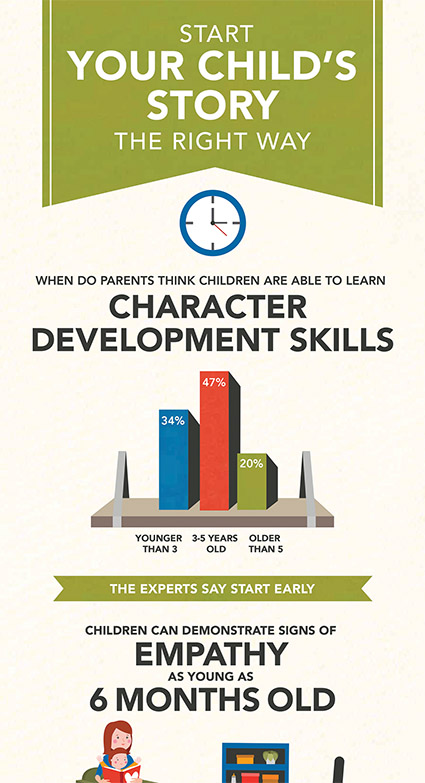
In today’s social media-focused world, 92 percent of parents agree that nurturing positive character traits in children is more important than it used to be. Yet nearly 50 percent of parents are unaware of just how early they can and should start helping their children develop these traits.


When Character-Building Should Begin


 The foundational skills for good character start emerging in the first year of life. Children as young as 6 months old can demonstrate outward signs of budding empathy skills. Character and emotional intelligence continue to develop throughout the early years and are significantly influenced by young children’s interactions with their parents and caregivers. Yet almost 50 percent of parents believe preschool is too early for children to start learning social-emotional skills, and could be missing critical opportunities to support their child’s development.

Why Nurturing Good Character Early is Important

Intentionally nurturing social-emotional skills starting at birth is an important and often overlooked opportunity as these skills have been shown to be key predictors of future health, academic and life success. Early brain and child development research now shows more clearly that the first five years of life are critical for building the foundation for traits such as honesty, generosity, compassion and kindness, which will impact children for a lifetime.

“We now know that IQ no longer represents an accurate predictor of school readiness, much less future life success,” said Dr. Laura Jana, a pediatrician and nationally acclaimed parenting and children’s book author. “It’s not just about learning the ‘3 Rs’ of reading, ’riting and ’rithmetic anymore. It’s the addition of a fourth ‘R’ that represents relationships and the importance of reading other people, which sets children up for success in today’s world.”

Finding Child Care that Nurtures Good Character


 In addition to parents, child care providers play a key role in helping children develop a strong foundation. However, more than half of parents surveyed feel their child did not or will not acquire honesty, generosity and compassion (54, 54 and 62 percent, respectively) during their early education experience.

Parents seeking early education and care for their children should look for providers that emphasize character development. In these nurturing environments, children have opportunities to learn and practice social-emotional skills every day through games, puppet play, books, music, art projects and more. At Primrose Schools, their Balanced Learning® approach also includes hands-on experiences to help children apply concepts like generosity in real-life situations.

For example, each year thousands of children at more than 325 Primrose schools across the country take part in the annual Caring and Giving Food Drive. The preschoolers earn money to purchase canned goods through chores at home. They practice perspective taking, learning about the importance of giving through stories, songs, art projects and more. They even take field trips to grocery stores to shop for food items, which are then donated to local charities. At the end of the experience, the children feel a sense of accomplishment and have practiced skills like empathy, generosity and compassion.

“We believe who children become is as important as what they know,” said Gloria Julius, Ed.D., vice president of education and professional development for Primrose Schools.

“That’s why nurturing children’s social-emotional development and building character has been an integral part of our approach for more than 30 years.”

Developing Character at Home


 Take an active approach to helping children develop a solid foundation in good character with these tips:
  • Help children recognize their feelings. Help little ones recognize and understand their feelings by giving them vocabulary words to express themselves.
  • Lead by example. Children learn a lot by watching the interactions of adults. Model social-emotional skills by listening to others, apologizing when you hurt someone’s feelings, being respectful of others, etc.
  • Help children identify other perspectives. Point out differences in other people’s thoughts and feelings. When reading with children, ask what they think the characters are feeling or narrate the emotions and exaggerate facial expressions for young children.
  • Talk about your own decisions in terms of right and wrong. As children’s abilities and understanding grows, discuss your values and take advantage of everyday situations to describe and demonstrate good citizenship and desirable behavior.
  • Let kindness and respect rule the day. Set household guidelines grounded in showing kindness and respect, and help children learn to follow them. When they break the rules, calmly explain how or why their behavior was unkind and how they could have better handled the situation.
For additional information, tips and resources on how to nurture good character in children, visit PrimroseSchools.com/character-resources.
SOURCE:
Primrose Schools

5 Ways to Persuade a Picky Eater


Section Image

(Family Features) For parents with a picky eater, it may seem that no amount of coaxing or prodding will get that little mouth in motion. A fresh approach may be all you need to make meal time a more enjoyable experience for all.

Proper nourishment is essential for a child’s development, so when a battle of wills erupts over food, it can leave parents feeling especially frustrated and concerned about their child’s well-being.

Fortunately, there are several strategies you can adapt to get meal time on track and healthy eating habits underway.

Make a one-bite rule.
A simple fact is that not everyone likes everything when it comes to food. Allow your child a sense of control in making decisions about the foods he or she likes or dislikes. When offering new items, implement a rule that requires trying at least one bite. Then, if he or she declines more, set it aside and focus on the other foods you are offering. Remember, tastes change over time – even day to day for some kids – so don’t be afraid to try again in the future.
]

Offer a fun incentive.
Make meal time an interactive experience with tableware that makes eating fun. Dinner Winner, by specialty giftware company Fred, is an award-winning kid’s dinner tray divided into small sections like a board game, where parents can portion out food into manageable bites along the path. The goal is to get to the finish line where a special covered treat awaits, providing motivation for children to eat their entire meal. The food-safe and dishwasher-safe plate is available in four styles – Original, Pirates, Supper Hero and Enchanted Forest – and features encouraging phrases like “keep it up” and “almost there.”

Keep it simple.
In an effort to entice kids to eat, some well-intentioned parents offer too many choices, which can be overwhelming. Instead, limit the options and let them pick from two meal options, such as a turkey sandwich or a peanut butter and jelly.

Approach meals like building blocks.
Think of each meal as a tower of blocks you’re teaching your child to stack. The bottom piece, the sturdy foundation, is a familiar food he or she willingly accepts like chicken or noodles. Then layer on additional pieces, such as adding a sauce with pureed veggies or a new protein.

Create a sense of ownership.
Kids are more likely to eat when they can take pride in the fruits of their labor. Enlist their help picking recipes and selecting foods at the grocery store, and encourage them to help make the foods they selected. Much like prized hand-made artwork, children enjoy showing and sharing the things they make all by themselves.

Find more kid-friendly solutions for mealtime and beyond at fredandfriends.com.
Photo courtesy of Jen Anderson (boy eating dinner)
Photo courtesy of Fred® (dinner plate)
SOURCE:
Dinner Winner

Keeping Kids Active in Cooler Temperatures


Section Image

(Family Features) As the weather gets colder, it can be harder to motivate kids to step away from their computers and devices and get off the couch. However, it’s essential for kids to participate in active play all year round. According to research from the Centers for Disease Control and Prevention, regular physical activity helps build and maintain healthy bones and muscles, promotes psychological well-being and reduces feelings of depression and anxiety.

Sadly, physical activity is becoming less of a priority in kids’ daily routines. A recent survey conducted by Let’s Play, an initiative from Dr Pepper Snapple Group to make active play a daily priority, found that 64 percent of parents said busy schedules stand in the way of more active play for their children, up from 56 percent in 2015.

Each season brings its own opportunities for play, and fall is no exception. Families can beat the cold weather blues and stay active together by trying some of the following activities:

Plan a nature walk to find inspiration and materials for art.
Even though it’s chilly outside, your family can still get out and enjoy the outdoors. Bundle up and take a nature hike with your kids around the neighborhood or at a local, national or state park. Encourage your kids to collect items like pinecones, acorns and leaves as you go and to be on the lookout for wildlife to observe. After the hike, take out art and craft supplies and help them create projects with the items they found.

Plan an indoor scavenger hunt.
When a really cold day comes along, send your kids on a fun and active scavenger hunt around the house, searching for items that you can hide in advance. Work together as a family to locate the items or create some friendly family competition to see who can find all the items first. Having the family move around the house with a mission prevents the temptation of staying on the couch in front of the television all day.

Join a class or indoor sports team.
Whether you are playing a favorite sport or learning a new one, it is always more fun with other people. Longer stretches of active play are often more likely to occur with friends or siblings. Sign your children up for an indoor sport or class they have never tried before, such as gymnastics, rock climbing, swimming or dance. This allows your children to learn something new, meet kids their age and be active for an extended period of time.

Volunteer.
While giving back is always in season, this time of year is a perfect opportunity to teach kids about giving back to those in need and being grateful for what they have. Sign the whole family up to volunteer at a local soup kitchen, participate in a toy drive for a children’s hospital or help out at an animal rescue shelter. Your children will not only be active, but will also grow emotionally, socially and intellectually as a result.

For more tips on how to keep kids active and to find play inspiration for all seasons, visit LetsPlay.com.

Photo courtesy of Getty Images
SOURCE:
Dr Pepper Snapple Group

Paying for college: Options reduce need for student loans

(BPT) - While only a fortunate few students can expect a free college education by winning full academic or athletic scholarships, everyone can take advantage of a combination of academic aid, grants, fellowships, work-study and student loans to pay for a four-year degree, says Peter Gayle, a vice president for Prudential Advisors. Unfortunately, many prospective students and their families often don’t know where to look.

With student debt increasingly becoming a long-term burden on graduates and families, adds Gayle, it’s never been more important to minimize the out-of-pocket expenses to put a student through college — and reduce reliance on student loans.

To put the weight of student debt in perspective, The Federal Reserve Bank of New York noted that in 1995, 54 percent of graduates had loans averaging $11,491. It’s more recent data in 2015 showed 71 percent of graduates joined the workforce with student debt averaging slightly more than $35,000. What’s more, the Federal Reserve Bank of New York estimates 25 percent of those who owe federal student loans are delinquent or in default.

The good news is that anyone willing to put in the time can likely find programs that help foot the bill — helping to reduce the need to take out loans — so a student’s education won’t break the budget or jeopardize a financial future. According to Gayle, families can take a few initial steps before choosing a school:

* Learn how the financial aid process works and get the most out of options that don’t need to be repaid.
* Understand each school’s actual net price — after financial aid — and set realistic expectations, choosing from the most affordable institutions.
* Explore types of financial aid, including grants, work study programs and scholarships; examine the specific types of aid available per school and find out how much of a family’s demonstrated financial need each school will cover.
* Understand the kinds of loans available, including a variety of federal loans and private loans, which may be used to fill any financing gaps after exhausting other options.
* Understand how parents’ “available income” is used to calculate how much parents are expected to contribute to their child’s education, especially for federal financial aid purposes.

Several guides, including Prudential Financial’s www.prudential.com/payingforcollege, can help families take a carefully considered approach to financing a college education while safeguarding a student’s long-term financial future, including the ability to save for retirement.

For families that must use student loans, the federal government is making it easier to understand how to borrow, process applications and repay loans through new online tools. Since 2010, all new federal loans, except Federal Perkins Loans, have been issued through the U.S. Department of Education, which offers information about borrowing and repaying loans.

There are multiple options to repay federally funded student loans, which generally require repayments to start six or nine months after a student graduates, leaves school or drops to half-time enrollment. A few popular choices for repayment include types of income-driven plans, which calculate payments based on a borrower’s ability to repay. One catch: It’s critical to re-certify income and family size annually to avoid huge monthly payment increases.

When debt becomes too burdensome, some loan programs offer forgiveness through public service, federal government employment, and options like teaching in underserved school districts.

Private loans are trickier since there is no standard: Interest rates and repayment terms vary from lender to lender. It’s also worth considering the need for life insurance to cover the full loan balance to aid co-signers or beneficiaries in the event of the borrower's death, says Gayle. Financial advisors would be well-equipped to help explore this and other options, Gayle notes.

Employers are also beginning to offer employee student debt benefits to put their employees on a course for financial security. At Prudential Financial, for example, new employees hired through the company’s campus recruitment program beginning in January 2017 could earn an incentive of up to $5,000 toward paying off student loans after one year of service. Other companies match student debt payments with contributions to employee retirement savings plans.

Studies show college education can be worth the price. The U.S. Census Bureau estimates that students who attend college can earn nearly twice as much over their lifetimes as those with only a high school diploma. But with college tuitions continuing to rise, families must find the most effective way to finance a child’s college education to avoid jeopardizing their ability to save for retirement.

"Prudential Advisors" is a brand name of The Prudential Insurance Company of America and its subsidiaries located in Newark, NJ.

0300462-00001-00

Cyberattack 411: Protecting your vehicle from hackers

(BPT) - New vehicles are packed full of the latest and greatest technology. Among their many capabilities, today’s vehicles can automatically apply brakes to avoid collisions, maintain a designated following distance behind the car ahead of it and maneuver the vehicle back into its lane if the driver veers out of it. Some cars can even drive and park themselves!

Additionally, in-car Wi-Fi and mobile hotspots allow passengers to connect their computers, tablets and smartphones to the internet from the convenience of the vehicle cabin. Bluetooth allows hands-free use of phones, and infotainment systems let people enjoy their favorite tunes, access apps, navigate and more.


These technological advances provide tremendous benefits for drivers and passengers, but much of this technology can also be used to launch cyberattacks on your vehicle.


“Modern cars are essentially rolling computers and, just as your laptop, smartphone or tablet can be hacked, so can these driving machines,” says Craig Smith, author of The Car Hacker’s Handbook and founder of the Open Garages vehicle research lab.


Millions of today’s vehicles possess vulnerabilities that leave them open to new age methods of theft that don’t require a key or Slim Jim or, worse, situations where drivers no longer have control over their vehicles while driving. Mercury Insurance, one of the nation’s leading auto insurance providers, recently connected with Smith to help keep drivers safe and shed some light on this growing problem.

According to Smith, there are several key vulnerable areas consumers should be aware of, including:

* On-board diagnostics-II (OBD-II) ports;

* Key fobs;
* Infotainment systems (including audio files that owners may have synced for in-car entertainment);
* In-car Wi-Fi;
* Mobile hotspots;
* Navigation systems;
* Smartphones (connected to cars via Bluetooth); and
* Tire pressure monitoring systems.

“There are many factors that go into determining a vehicle’s risk of being hacked,” says Smith, who has worked in the security industry for more than 20 years and with the auto industry for five. “Newer vehicles have what we call a higher ‘attack surface,’ meaning there are more areas that are hackable."


“If you are specifically concerned about remote hackers, as opposed to those who have physical access to your car, then look at the wireless systems your vehicle supports. If your vehicle has telematics, satellite or digital radio, internet, Bluetooth, or wireless key fobs, these wireless services can provide entry points for an attacker over varied distances. This is also true for aftermarket components added to your vehicles, such as dongles plugged into your vehicle to monitor your driving for insurance reasons.”


Local hackers can gain access to a car to unlock it and steal its contents or even start the ignition to steal the vehicle.


To protect against vehicle hacking, Smith recommends disabling wireless services that aren’t being used. Consumers should refer to the information their auto manufacturer provides on vehicle features, decide which ones are important and only enable those options. Those who wish to use a dongle in their vehicle should try to use it sparingly and take it with them when they leave their car.


“The key to protecting your vehicle if it’s deemed at-risk for hacking is to disable the components that have the most risk. For instance, if the radio unit is the culprit you can disable it or replace it,” says Smith. “And while newer vehicles tend to have a larger attack surface, they also have more safety features that can help minimize or avoid injury in a collision, so you should consider that as well.”


Mercury Insurance is helping consumers answer the question “How Hackable is Your Car?” with an infographic that shows the areas of a consumer’s specific vehicle that may be vulnerable to a cyberattack. Visit https://blog.mercuryinsurance.com/how-hackable-is-your-car to learn more.


“We continuously review the automotive marketplace, so we can provide consumers with important information about how to protect themselves, families and property, whether it’s about the dangers of distracted driving, teen driving safety or, now, vehicle hacking,” says Tom Coyne, auto line lead for Mercury Insurance. “And Mercury doesn’t use dongle technology because we don’t want to increase our customers’ risk of a cyberattack, which we think they appreciate.”

Polls Show Personal Experience With Obamacare Increases Opposition

As Congress comes closer to repealing Obamacare, proponents of the law have mounted a vocal defense of it, touting both its necessity and popularity among those it has helped.

But public opinion polls tell a different story.

Obamacare was passed in 2010 amid controversy, and has not done very well since. Because some of its provisions polled well, many expected that as the law was implemented over time it would become more popular, similar to Social Security and Medicare.

The Atlantic, for instance, reported on Oct. 10, 2013 that a poll of Democratic political insiders showed that 98 percent thought Obamacare would become more popular once it was implemented.

Similar sentiments were expressed by Sen. Charles Schumer, D-N.Y., on “Meet the Press” on Mar. 28, 2010, just days after the law was signed by President Barack Obama:

I think as people learn about the bill, and now that the bill is enacted, it’s going to become more and more popular … So I predict, by November those who voted for health care will find it an asset, those who voted against it will find it a liability.

Yet despite recurring optimistic predictions, Obamacare has remained persistently unpopular. Disapproval of the law has consistently outweighed approval, sometimes by margins as large as 20 points.

The polling data show us that Obamacare has been unpopular. They can also shed light on why.

The Pew Research Center finds that as time goes on, more people report being personally affected by Obamacare—as would be expected for any new government program.

However, Americans reporting they have been negatively affected is higher than those who say they have been positively affected.

Similarly, Gallup’s regular polling also consistently found that more Americans said the law has hurt them and their families than say it has helped, sometimes by a margin of 2-to-1.

Over the second half of 2016, that margin widened. Twenty-nine percent of Americans said they had been hurt by it, an increase from 26 percent earlier in the year. Only 18 percent said they had been helped, down from 22 percent, for a full 11-point margin.

In comparison, when Pew asked about “the health care law’s effect on you and your family,” negative responses outweighed positive responses 31 percent to 23 percent—a 9-point margin.

Quality of care, access, and soaring costs usually top the list of issues and concerns Americans have with Obamacare.

According to another study by Gallup, those rating their health care coverage as excellent decreased 5 points in 2015 from 30 percent to 25 percent, while those who rated their coverage “only fair” climbed.  Those rating the quality of health care they receive as excellent dropped 8 points over the same time period, from 39 percent to 31 percent.

Those paying some or all of their health premiums increasingly say their premiums have gone up (74 percent in 2015, up from 67 percent in 2014).

Despite promises that Obamacare would help make health care more affordable, 67 percent of Americans in a Kaiser Health Tracking Poll conducted in December 2016 still say lowering the cost of health care should be a top priority for President Donald Trump and Congress.

In short, as more Americans personally experienced Obamacare, more of them expressed dissatisfaction with its results. That strengthens the Republicans’ case for repealing and replacing the law.

Commentary by The Heritage Foundation's Elizabeth Fender.  Originally published at The Daily Signal.
Don’t Let the Democrats Fool You About a 60-Vote Threshold for Neil Gorsuch

This week, I had the pleasure of being at the White House when President Donald Trump introduced his nominee to be associate justice of the Supreme Court, Judge Neil Gorsuch of the 10th U.S. Circuit Court of Appeals.

It shouldn’t surprise anybody that the president delivered on a promise made during the campaign when he listed 21 people that he would choose from. Everybody knew ahead of time what sort of a judge he would put on the court for this vacancy or any future vacancy.

Gorsuch’s decade of service on the 10th Circuit has earned him a reputation as a brilliant, principled, and mainstream judge. It’s already been widely reported that he was unanimously confirmed by a voice vote to the 10th Circuit. There are still 31 senators in this body who voted for the judge at that particular time. Twelve of them are Democrats, and one of them is Senate Minority Leader Chuck Schumer of New York.

Yet even before we had the nominee, there were some Democrat members who vowed to filibuster the nominee, sight unseen. That’s, of course, unfortunate. But given how Democrats have treated the president’s Cabinet nominees so far, it isn’t exactly surprising.

Gorsuch is universally respected as one of the finest and most fair-minded judges in our country. In fact, one of President Barack Obama’s solicitors general called him “one of the most thoughtful and brilliant judges to have served our nation over the last century.” If that’s not “mainstream,” I don’t know what is.

After the president’s announcement, something interesting happened. Right out of the gate, there were a number of Senate Democrats calling for “a hearing and a vote.” Well, that certainly sounds encouraging. The press picked up on these comments, and one newspaper even reported that after learning who the nominee was, there were already seven Senate Democrats opposed to filibustering him.

At first glance, it appears those Democrats were trying to be consistent with their stance from last year that a nominee deserves a hearing and an up-or-down vote. That’s what those comments would lead you to believe. Even the press was fooled.

But of course, now they conveniently seem to have dropped the “up-or-down” portion of that stance.

That’s a neat trick.

Take for example, one of my colleagues who just last year said, “The Constitution says the Senate shall advise and consent, and that means having an up-or-down vote.” But, oddly, just yesterday, that same colleague said, “I support a 60-vote margin for all Supreme Court nominees.”

That’s a nice sleight of hand. But most senators aren’t that gullible.

The Washington Post fact-checker certainly took notice of their wordsmithing. And that has earned them two Pinocchios. When you look at the facts, a 60-vote threshold has never been the “standard” as the Democrat leader said yesterday. Otherwise, we wouldn’t have two of the current justices sitting on the Supreme Court.

My colleagues tried unsuccessfully to filibuster Justice Samuel Alito. The Senate voted 72-25 to invoke cloture. He was then confirmed 58-42 on an “up-or-down” vote. Justice Clarence Thomas was confirmed 52-48. There was no cloture vote on his nomination.

In fact, the Senate didn’t set any sort of requirement that there be 60 votes for seven of the eight justices serving on the court. So if there has been any sort of requirement or practice in the Senate on Supreme Court nominees, it’s that the nominee does NOT have to get 60 votes, although many of them end up getting that kind of support.

We already know some members have pledged to filibuster the nominee. And the Democrat leader stated that part of the “fair process” is a 60-vote threshold. I suppose if you’re already committed to attempting a filibuster on a Supreme Court nominee before you even know who it is, then you might consider that part of the “fair process.”

Of course, we all know—Republicans and Democrats—that launching a filibuster against a Supreme Court nominee isn’t part of a “fair process.” It never has been.

But I suppose we should cut our colleagues a little slack. They’re having a hard time figuring out how to make good on their promise to attack the nominee no matter who it is, when they’ve now been presented with a nominee with impeccable credentials and broad, bipartisan support.

And this brings me to my second point.

Gorsuch had barely finished speaking at the White House, and there were already attacks on the nominee by some on the left. Some of my colleagues on the other side of the aisle have already taken to the Senate floor to attack and mischaracterize Gorsuch’s record.

Though we expected it, these scurrilous attacks are untoward and misplaced.

After all, those on the left trot out the same tired arguments against every Republican nominee.

They attacked Justice John Paul Stevens because he “revealed an extraordinary lack of sensitivity to the problems women face.” They called Justice Anthony Kennedy a “sexist” who “would be a disaster for women.” And they said there was “ample reason to fear” Justice David Souter.

This morning, The Washington Post editorial board noted that while we argued last year that the president shouldn’t fill a Supreme Court vacancy that occurs during a presidential election year, Senate Republicans “refrained from tarring Mr. [Merrick] Garland personally.”

In contrast, they noted that “trashing Mr. Gorsuch as an outlandish radical, despite his impeccable credentials, the wide respect he commands in his field, his long service as an appeals court judge and the unanimous voice vote he received the last time the Senate considered him for the federal bench, is at the very least premature.” Our friends on the other side of the aisle would do well to take note of this observation.

If the process we’ve witnessed for Trump’s Cabinet nominees is any guide, I’m quite confident we’ll hear all manner of reasons and arguments about why we should delay a hearing for Gorsuch.

But, as my friend and former chairman of the Judiciary Committee, Sen. Patrick Leahy, often notes: Supreme Court nominees don’t have the opportunity to respond to personal attacks outside of their confirmation hearing.

I’m going to consult with Sen. Dianne Feinstein, D-Calif., ranking member on the Judiciary Committee, about the timing for Gorsuch’s hearing. But I can tell you what we aren’t going to do. We’re not going to delay this hearing, especially in the face of all of these attacks on his record and character.

I met with Gorsuch yesterday. He’s as impressive in person as he is on paper.

I expect that as my friends on the other side of the aisle meet Gorsuch and actually review his record, they’ll find him to be an eminently qualified and universally respected judge whose decisions faithfully applying the text of the law place him well within the judicial mainstream.

Commentary by Senator Chuck Grassley.  Originally published at The Daily Signal.